

Double-Sided Billboard
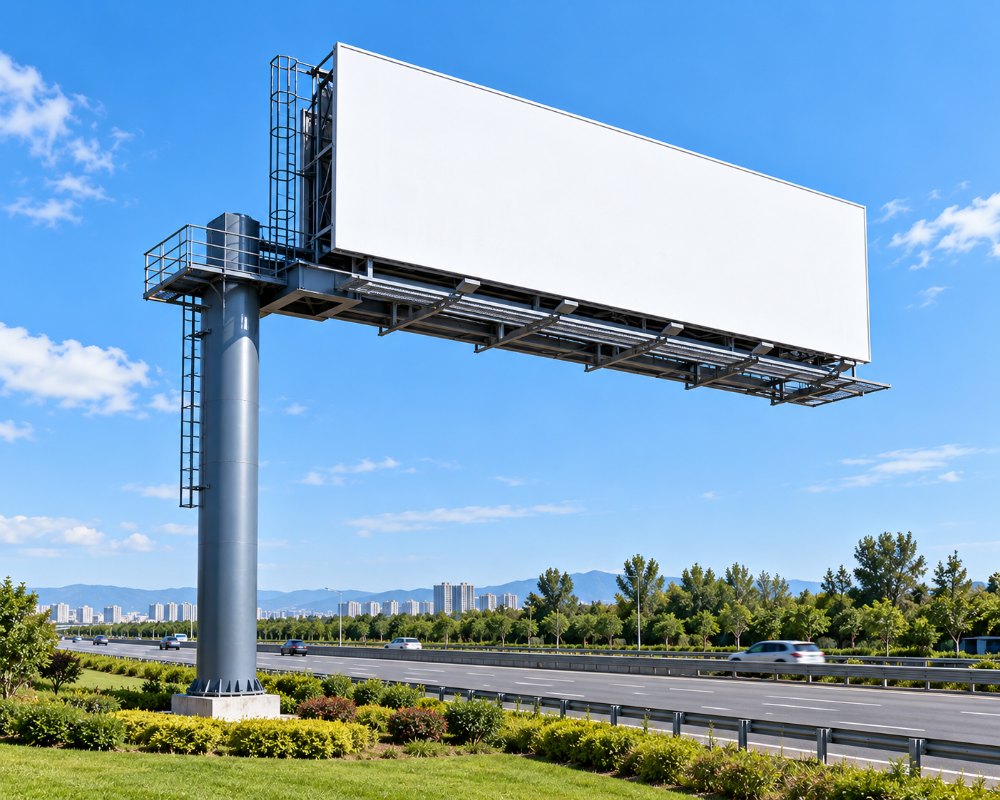
A double sided billboard is an outdoor advertising structure that carries two parallel display faces back to back on a single steel support, so one column serves traffic approaching from both directions.
QIANXI Outdoor designs and fabricates these structures for highway, arterial road, commercial frontage and outdoor media projects. Each frame is engineered around the panel size, the site wind load and the foundation conditions of the project, then galvanized and packed for container shipment.
-
Offset Cantilever Unipole Billboard Structure for Custom Projects
-
Heavy-Duty Single-Pole Highway Billboard
-
Real Estate Uni-Pole Billboard — Large-Scale Branding
-
Highway Unipole Billboard – Single Pole Outdoor Advertising Structure
-
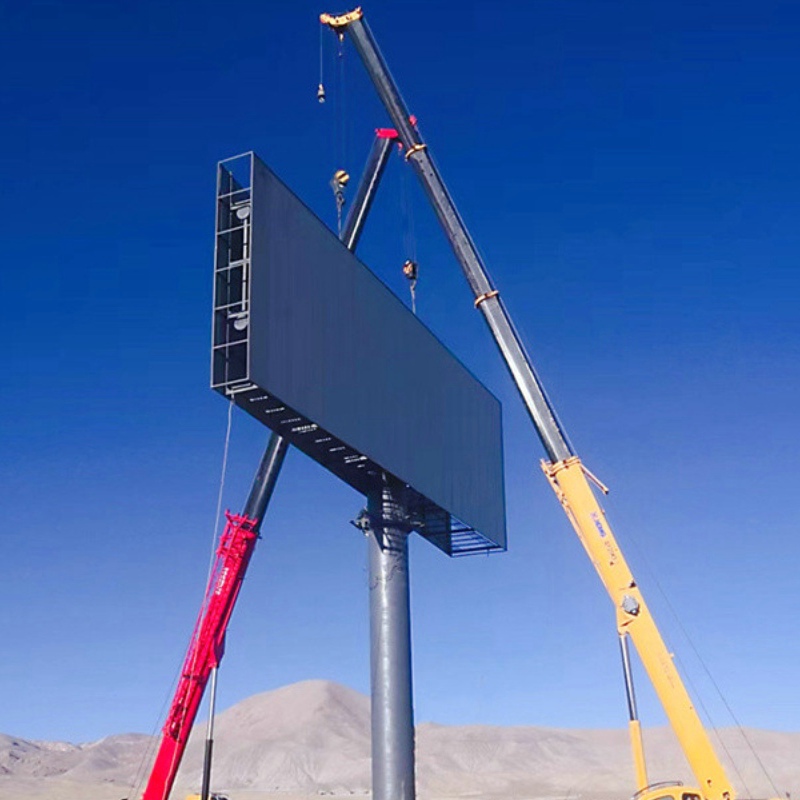
Single Pillar Billboard in Complex Meteorological and Geographical Environment
-
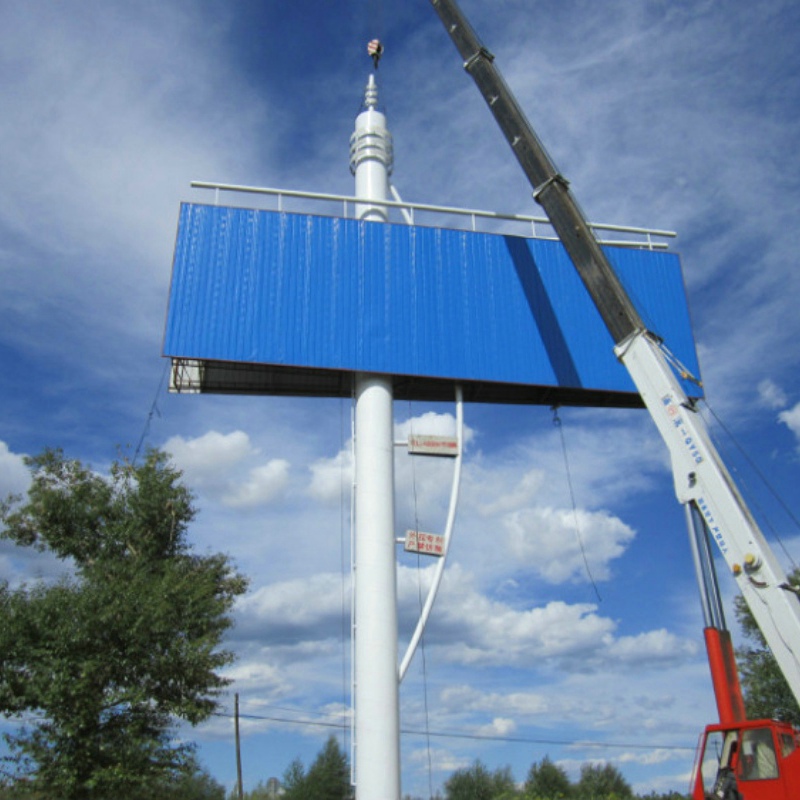
Upper Section Installation of Outdoor Billboard
-
Placement of Upper Structural Components of Billboard
-
Doulbe Torsion-beam Freestanding Billboard
-
Off Center Unipole Doulbe Sided Adversting Billboard With
-
Offset Cantilever Unipole Billboard Structure | QXOUTDOOR
-
Double-Sided Unipole Billboard Structure | QXOUTDOOR
-
Custom Uni-Pole Billboard




Product types
- Standard back-to-back unipole — two parallel faces on one circular or polygonal column; the most common configuration for roadside sites.
- Large-format double face — oversize panels that need a heavier column and a bolted flanged splice so the mast can ship in sections.
- Double face with catwalk — service platform, ladder and guardrail for lamp or LED maintenance access.
- A V-shaped or angled twin-face structure is a different product type. Its faces are not parallel, the wind load is applied eccentrically, and the column has to resist torsion as well as overturning. We build both, but they are quoted and documented separately.
Technical specifications
| Item | Available configuration |
|---|---|
| Display configuration | Two parallel faces, back to back |
| Main support | Single circular or polygonal steel column |
| Panel size | Project specific; commonly 3 × 6 m to 6 × 18 m per face |
| Structural steel | Q235B or Q355B, or project-specified grade |
| Wind load | Designed to site basic wind speed, terrain category and structure height |
| Surface protection | Hot dip galvanizing; optional topcoat over prepared surface |
| Access | Optional catwalk, ladder and guardrail |
| Foundation | Anchor-bolted base plate on cast-in-place concrete footing |
| Connections | Welded shop connections; bolted flanged splices for tall masts |
Engineering and fabrication
Each structure starts from the panel size and the site wind load, not from a stock drawing. We calculate wind pressure on both faces, including the shielded face, and size the column, base plate and anchor set for the resulting overturning moment.
Columns are welded from rolled sections with full penetration welds at the base connection, and frames are jig assembled so that panel fixing centres stay within tolerance after galvanizing. Vent and drain holes are placed before dipping so no sealed cavity is left. Long masts are split into transportable sections with match-marked bolted splices.
Applications
Double sided structures suit sites where the advertising has to be read from two directions: expressways and highway approaches, arterial roads and ring roads, commercial frontage and retail parks, and outdoor media concessions along intercity routes. One column and one foundation serve two exposures, which usually reduces civil work cost per face compared with two independent structures.
Customization
Panel width and height, column height to the underside of the panel, base connection type, access arrangement, coating colour and packing method are all set per project. To quote we need the panel size, the number of faces, the site wind speed or design wind pressure, and soil or foundation information. Approval drawings are issued before fabrication starts.
FAQ
What is the difference between a double sided and a V-shaped billboard?
A double sided structure carries two parallel faces back to back on one column, so the wind load is balanced and the column mainly resists overturning. A V-shaped structure sets the two faces at an angle; the load is eccentric and the column also resists torsion. The two are engineered and priced differently.
Can the two faces carry different panel sizes?
Not as a standard configuration. Unequal faces shift the centre of pressure and introduce torsion that the column and foundation must be designed for. It is possible, but the difference has to be stated at enquiry stage.
What do you need to quote a double sided structure?
Panel size and number of faces, column height, site wind speed or design wind pressure, foundation or soil report where available, coating requirement and destination port.
How is the steel protected against corrosion?
Hot dip galvanizing after fabrication is the standard finish. A topcoat can be applied over a prepared galvanized surface where the environment or the client specification requires it; coastal and high humidity sites are usually specified with a heavier coating system.
How is a 12 m mast shipped?
In two or three sections with bolted flanged splices, match marked and packed together with the anchor set and base plate. Loading plans are issued for container or flat rack shipment.
Request a quote
Send the panel size, site location and wind condition, and we will return a structure proposal with drawings, a bill of materials and a delivery schedule.