

Steel Grade for Billboard Structures: A36, S355 or Q355?
In short: the grade sets the yield strength of the steel, and that decides how much material a pole needs — but a higher grade is not automatically better. Deflection, buckling and weldability often control a billboard design, and using a stronger steel without re-checking those can cost more rather than less. Specify the grade with the design code, not instead of it.
What the grade actually controls
- Yield strength — the stress at which the steel starts to deform permanently. It sets the section capacity in bending and compression.
- Tensile strength — the design capacity, used in connection and bolt design.
- Elongation — ductility. A structure that can deform before failing gives warning; a brittle one does not.
- Weldability — carbon equivalent. Higher strength grades generally need more care in welding procedure and preheat.
Common grades by market
| Grade | Typical minimum yield | Common market |
|---|---|---|
| Q235B | 235 MPa | China, general structural work |
| Q355B | 355 MPa | China, higher-loaded structures |
| ASTM A36 | 250 MPa | North America, general structural |
| ASTM A572 Gr.50 | 345 MPa | North America, higher strength |
| S275 / S355 | 275 / 355 MPa | Europe, EN 10025 |
The grades are broadly equivalent in families rather than identical, and the permitted substitution rules differ by code. If a design is checked to AISC, do not substitute a Chinese grade without confirming the equivalent properties and the welding consumables.
Why higher grade is not always cheaper
For a unipole, the governing check is often deflection at the upper part of the pole under wind load, not just stress. Deflection depends on stiffness — the modulus of elasticity — and the modulus is essentially the same for all structural steels, around 200 GPa. So if deflection controls, upgrading from A36 to A572 Gr.50 buys nothing: the pole still has to be the same size to stay stiff enough.
Two further effects matter:
- Local buckling. Thinner walls in higher-grade steel buckle earlier, and a slender pole can be limited by buckling rather than yield.
- Welding and inspection. Higher strength grades usually require qualified procedures, preheat and more inspection, which is a real cost.
How grade choice changes the structure
When strength genuinely governs — a very tall pole, a large panel area, heavy display equipment — a higher grade reduces plate thickness and section size, which reduces weight, freight volume and foundation loads. That is where the saving is real. On a standard 12 to 18 m unipole carrying a static panel, the design is more often governed by stiffness, fatigue at the connections and the foundation, and the grade change has little effect.
What to write in the enquiry
- The design code and the design wind speed, with the return period.
- The panel dimensions, the number of faces and the weight of the display equipment.
- The mounting height and the maximum permitted deflection at the upper section.
- The required steel grade, or a note that the manufacturer may propose one with calculations.
- The corrosion protection class, since coating interacts with section thickness.
With those five items, a supplier can design rather than guess. Without them, the grade becomes a price variable rather than an engineering decision.
Quick answers
Is A36 strong enough for a billboard?
For many single-pole and double-sided structures it is, when the pole is sized to control deflection. Whether it is adequate for a specific project depends on height, panel area and wind load, which is what the design calculation is for.
Can Q355 be substituted for S355?
They are close in yield strength but the standards, tolerances and welding requirements differ. Substitution should be confirmed by the designer against the governing code, not agreed between buyer and fabricator.
Does a thicker pole always mean a stronger billboard?
It increases stiffness and capacity, but it also increases weight, foundation load and cost. Past a point the foundation becomes the limiting item, and a different structural arrangement is more economical than a heavier pole.
Next step: send the panel size, mounting height and design wind speed to our engineering team through the contact page, and we will return a structure proposal with the grade and section sizes stated. For the wider list of inputs, see which engineering inputs are needed before ordering a unipole billboard.
 How a Billboard Steel Structure Quote Is Priced
 Billboard Structure Inspection: 12-Point Annual Checklist
 Billboard Frame Deflection: What Limits Apply?
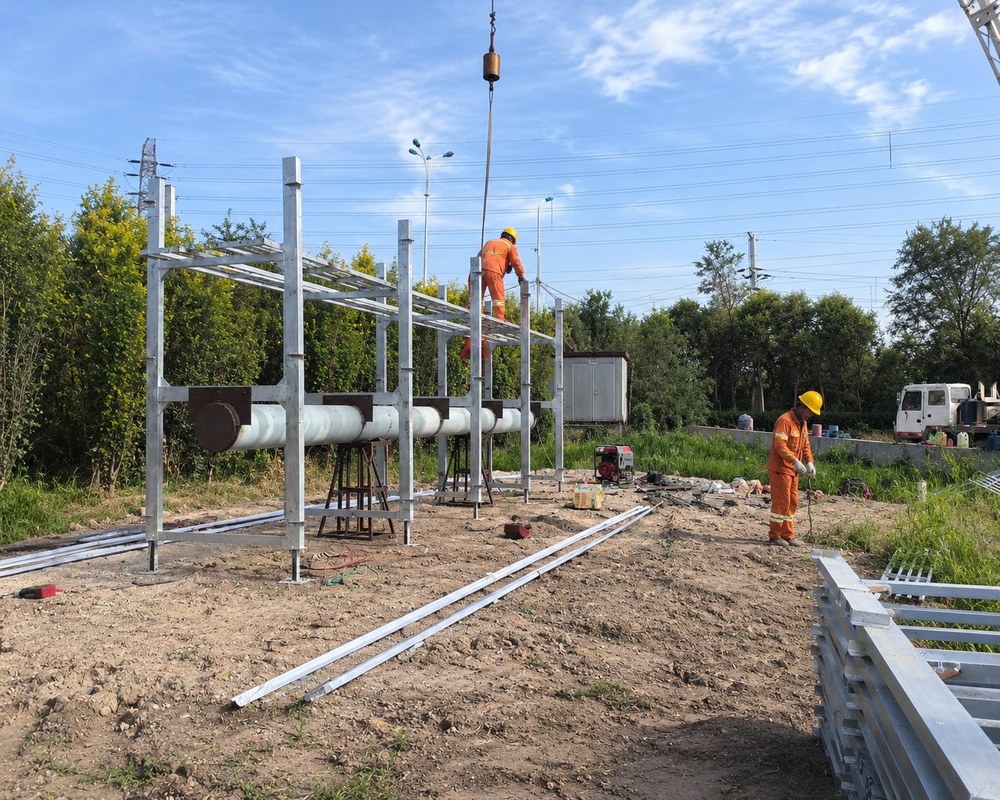 Hot-Dip Galvanising for Billboard Steel: What to Specify
Steel Grade for Billboard Structures: A36, S355 or Q355?
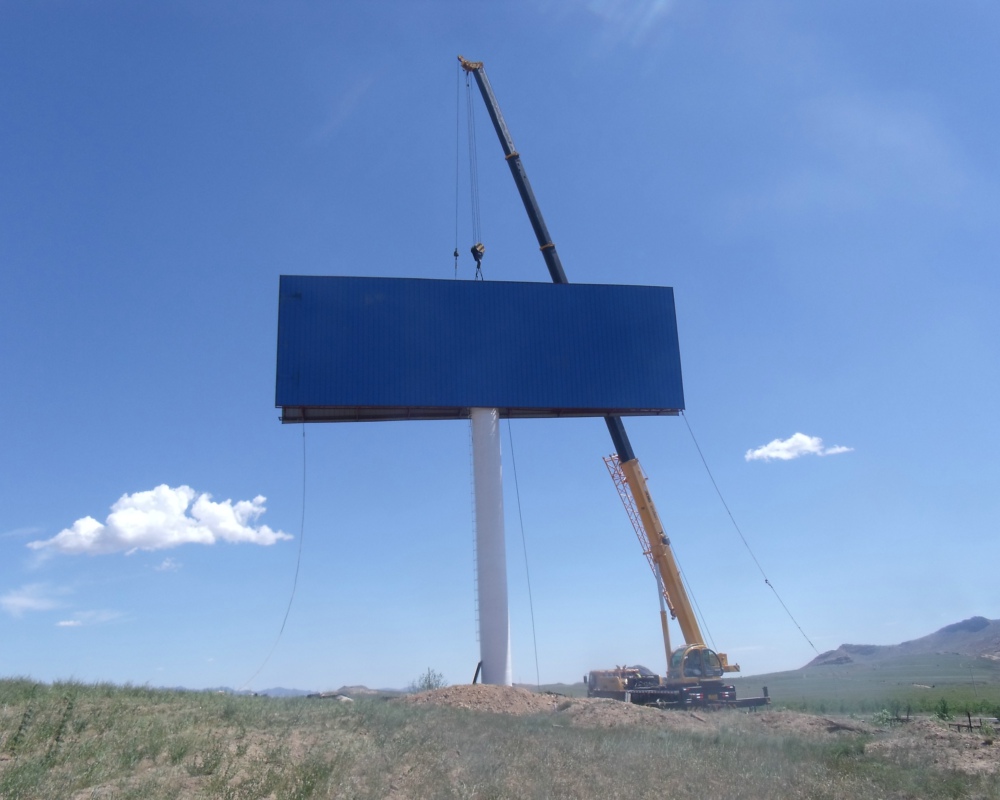 Wind Load Design and Installation Essentials for Outdoor Billboard Steel Structures | QX Outdoor
 Offset Cantilever Billboard Planning: Five Questions Before Fabrication
 QIANXI Outdoor Develops Wind-Resistant Engineering Solutions for Long-Term Outdoor Advertising Structures
 QIANXI Outdoor Expands LED Billboard Structure Solutions for Digital Outdoor Advertising Markets