

Wind Load Design and Installation Essentials for Outdoor Billboard Steel Structures | QX Outdoor
Answer: A billboard steel structure must be engineered around its local 50-year return wind speed: the frame, connections and foundation are designed to survive repeated gusts and vortex shedding, not just static pressure. Our structures are calculated for site-specific wind zones (up to 220 km/h), fatigue-checked at bolted connections, and anchored to pile or block foundations matched to soil conditions.
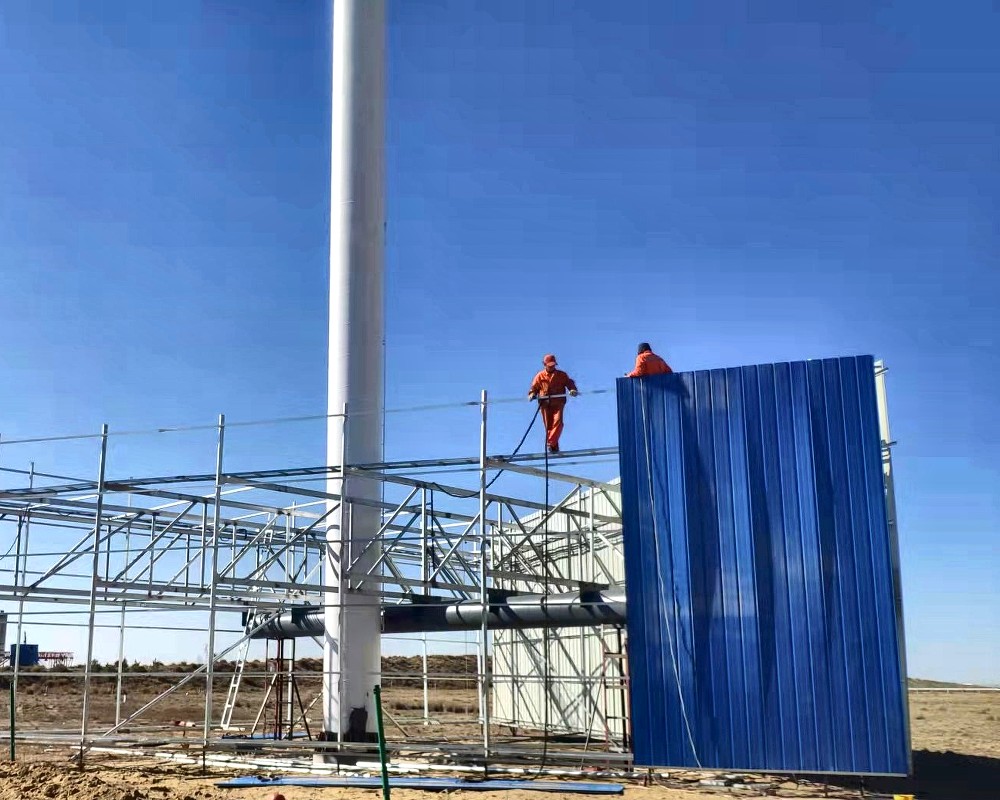
Wind is the single biggest structural force acting on an outdoor billboard. A large unipole presents a solid panel area of 100–300 m² to the sky — at typhoon-level wind speeds, the total load can exceed 100 tonnes of horizontal force. This is why professional billboard engineering starts with the wind map, not the steel price. In this article we explain how wind load actually shapes a billboard structure, and the installation details that separate structures that last 30 years from those that fail in the first storm.
How Wind Load Shapes the Structure
- Design wind speed: every project starts with the site's 50-year (or 100-year) return wind speed per local code — Eurocode EN 1991, ASCE 7, BS 6399 or national standards.
- Dynamic pressure: pressure rises with the square of wind speed — doubling the wind speed quadruples the force. One extra design category changes steel tonnage significantly.
- Shape and height factors: panels at 25–40 m height see stronger, smoother wind; truss-backed panels and louvered faces reduce overall drag.
- Vortex shedding and fatigue: slim monopoles oscillate in steady wind, so welded splices are minimized and critical joints use high-strength bolts with fatigue-rated detailing.
- Galvanization: wind also drives corrosion on coastal sites — hot-dip galvanized (≥86 μm) steel is our default for seaside projects.
Foundation: Where Billboard Failures Actually Happen
Most billboard collapses are foundation or anchor failures, not steel failures. We select the foundation type from a geotechnical report:
- Independent block footings (4-pad): standard for good soils; each leg anchors into its own reinforced concrete pad.
- Single large raft: for small monopoles on tight urban sites.
- Cast-in-place pile caps: for soft or reclaimed soils — 2–4 bored piles per leg group.
- Rock anchoring: where bedrock is shallow, anchor bolts grouted into drilled rock sockets.
Anchor bolts are always specified with double nuts, locking washers and a documented torque value — and re-checked at the 12-month inspection.
Seven Installation Checkpoints on Site
- 1. Anchor bolt survey: verify bolt positions, projection and level against the anchor plan before any steel arrives.
- 2. Grout quality: base plates sit on non-shrink grout — never dry-pack or gaps.
- 3. Verticality: the mast is plumbed in two directions at every splice; tolerance is H/1000.
- 4. Bolt torque records: every high-strength bolt torqued to spec and logged by location.
- 5. Bracing completeness: temporary guying during erection, all permanent bracing installed before the panel goes up.
- 6. Panel drainage: face panels and trim installed with weep paths so wind-driven rain cannot pond inside the frame.
- 7. Lightning and grounding: air terminal on Upper, down conductor and earthing tested before handover.
Annual Maintenance That Protects Your Investment
- Re-torque and visually inspect anchor bolts annually, and after any storm above 120 km/h.
- Check welds and gussets at the mast-to-panel connection for fatigue cracks.
- Clean drainage paths and inspect cladding fasteners for backing-out.
- Re-paint or touch up coating damage promptly — rust spreads quickly at connection points.
Frequently Asked Questions
What wind speed can a billboard structure withstand?
We design to the site's code-specified wind speed, commonly 150–220 km/h depending on region and exposure class. The design always follows your local building code's 50-year return wind map, not a generic figure.
Do I need a soil report before ordering?
Yes, or at minimum a geotechnical survey of bearing capacity. The foundation is half the safety of a tall billboard — we size it from real soil data, and the report usually pays for itself in foundation cost savings.
Can the billboard survive hurricanes or typhoons?
Structures we deliver to typhoon zones are calculated for those loads and use fatigue-resistant bolted connections, deeper foundations and (optionally) vented or louvered panel faces to reduce peak pressure.
How long does installation take?
A standard 18 m × 6 m double-sided unipole installs in 5–8 working days with one 50 t crane: foundation cure time is the long pole and runs in parallel before steel delivery.
Get a Wind-Engineered Billboard Quotation
Send us your site location, panel size and local wind zone — we'll return engineering parameters, steel drawings and an export price within 48 hours.
Email: qxbillboard@qxgg.com | Tel: +86-311-85651263