

July 2026 Shipment: Billboard Steel Frames and Pole Sections Bound for North America
The third batch of the 2026 season was loaded at the end of June, completing the run of North American shipments shown in this series. Where the earlier batches were dominated by long unipole shafts, this one is mostly frame and beam work — shorter components, more of them, and a different handling problem.
Frame work rather than shaft work
Short structural members are harder to load than long ones. A pole can be restrained at two points and will not move; a stack of beams and frame sections has to be blocked, separated and tied so that individual pieces cannot work their way loose.
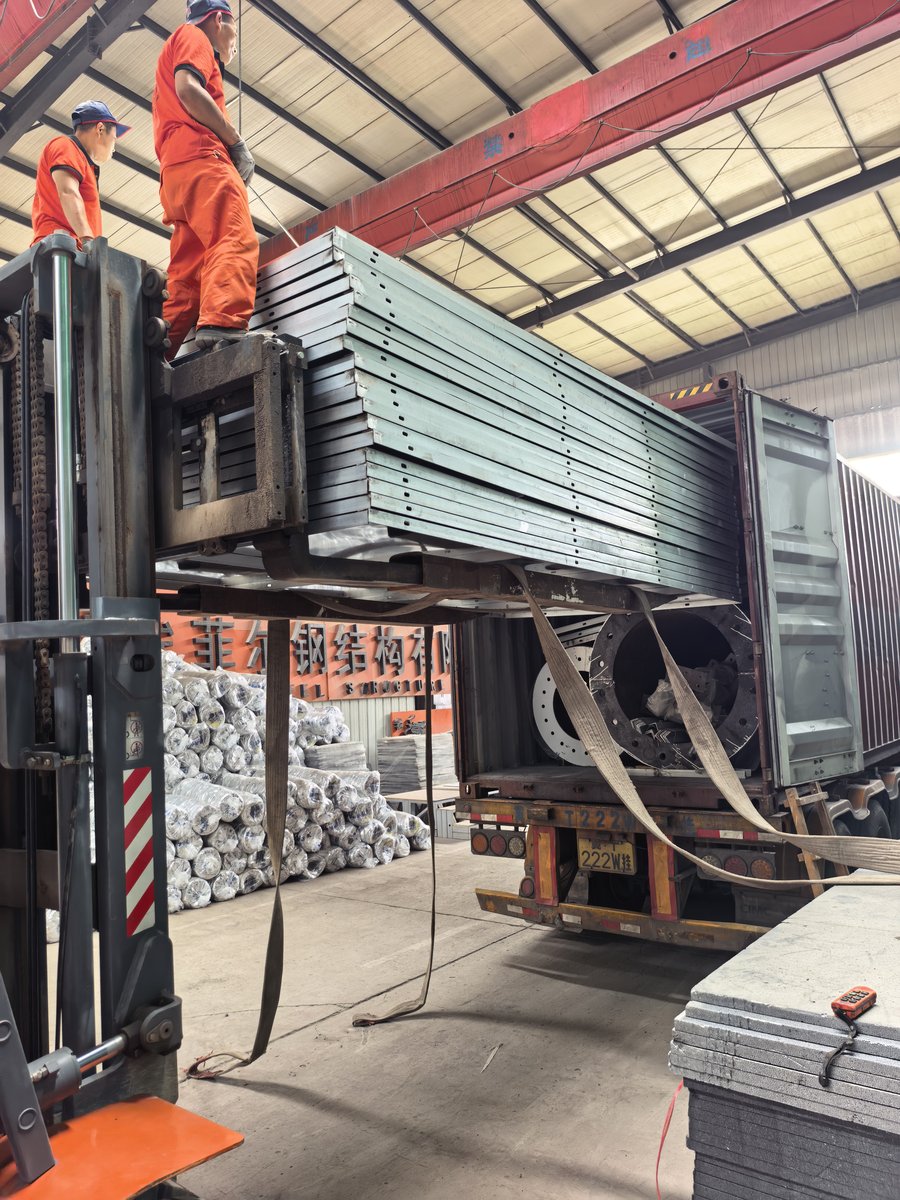
The photographs show the answer used here: bundled sections lifted by forklift, laid in layers with timber between them, and packed tight enough that the bundle behaves as one rigid block.
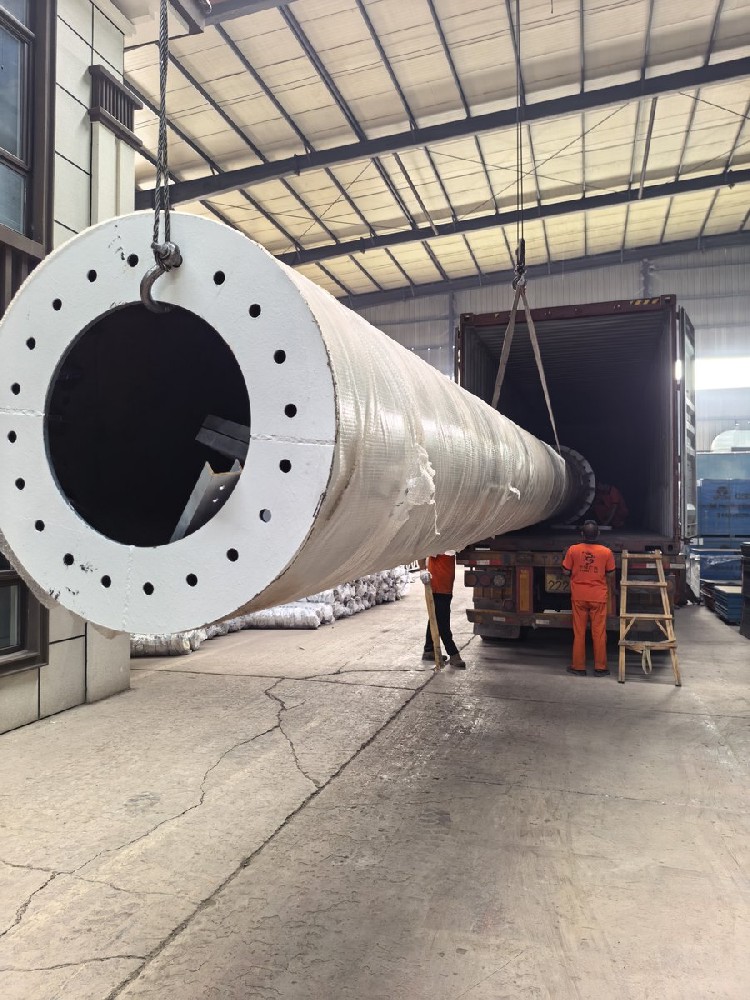
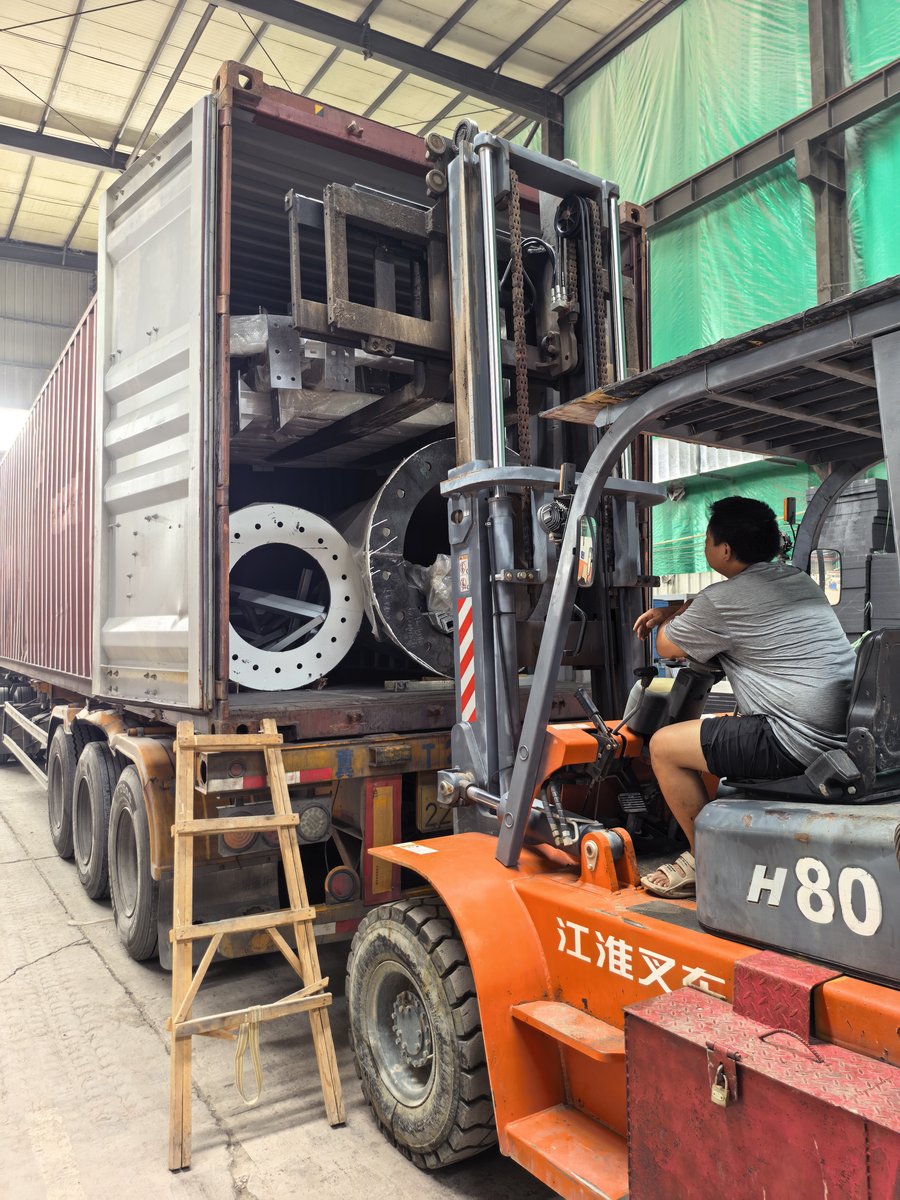
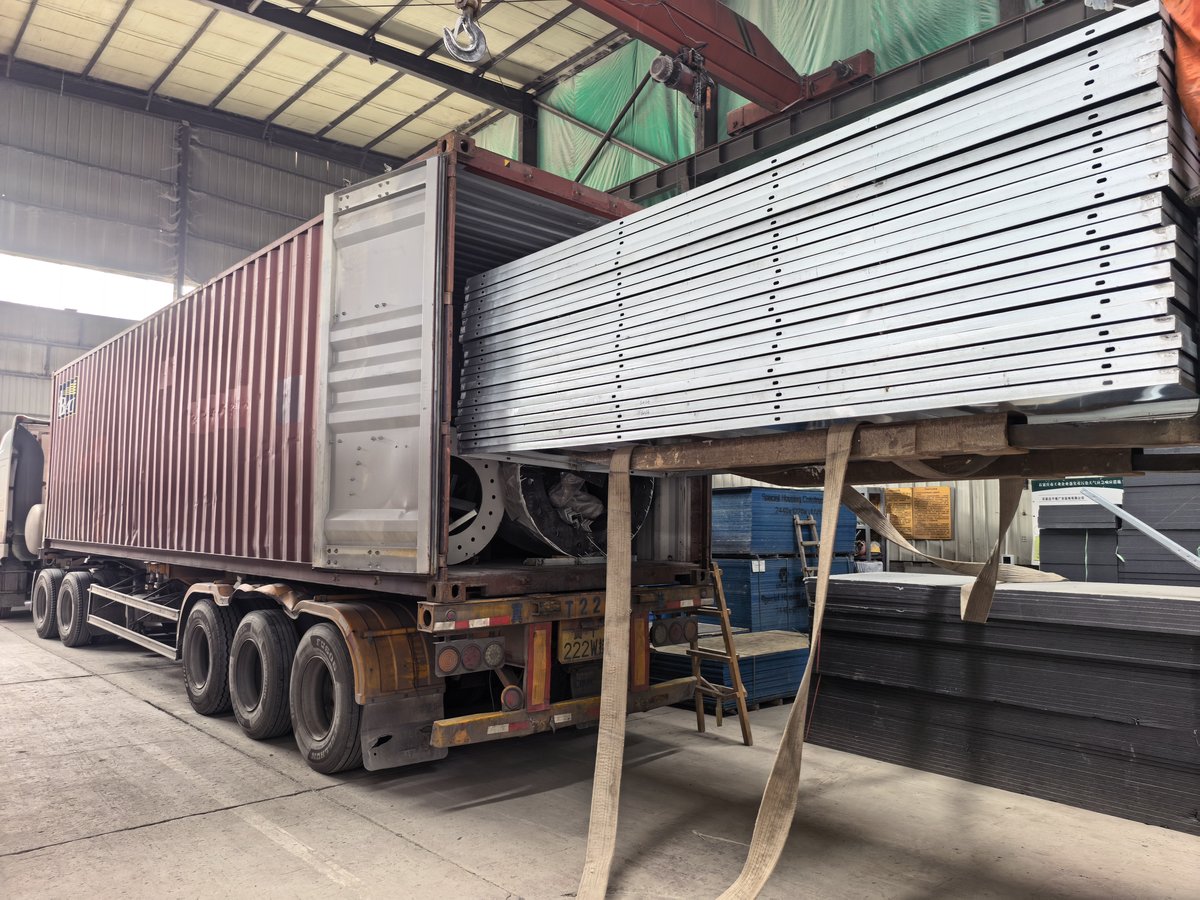
Pole sections and connection hardware
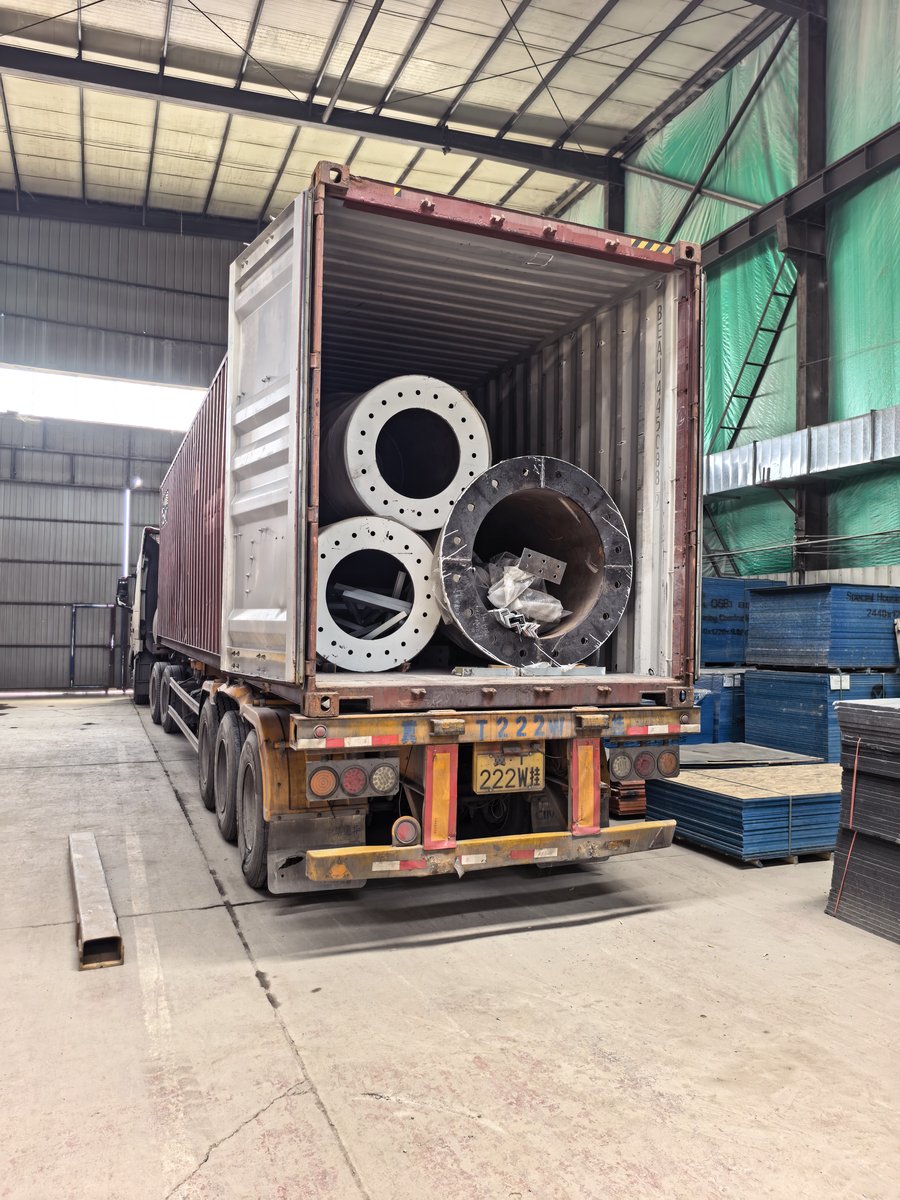
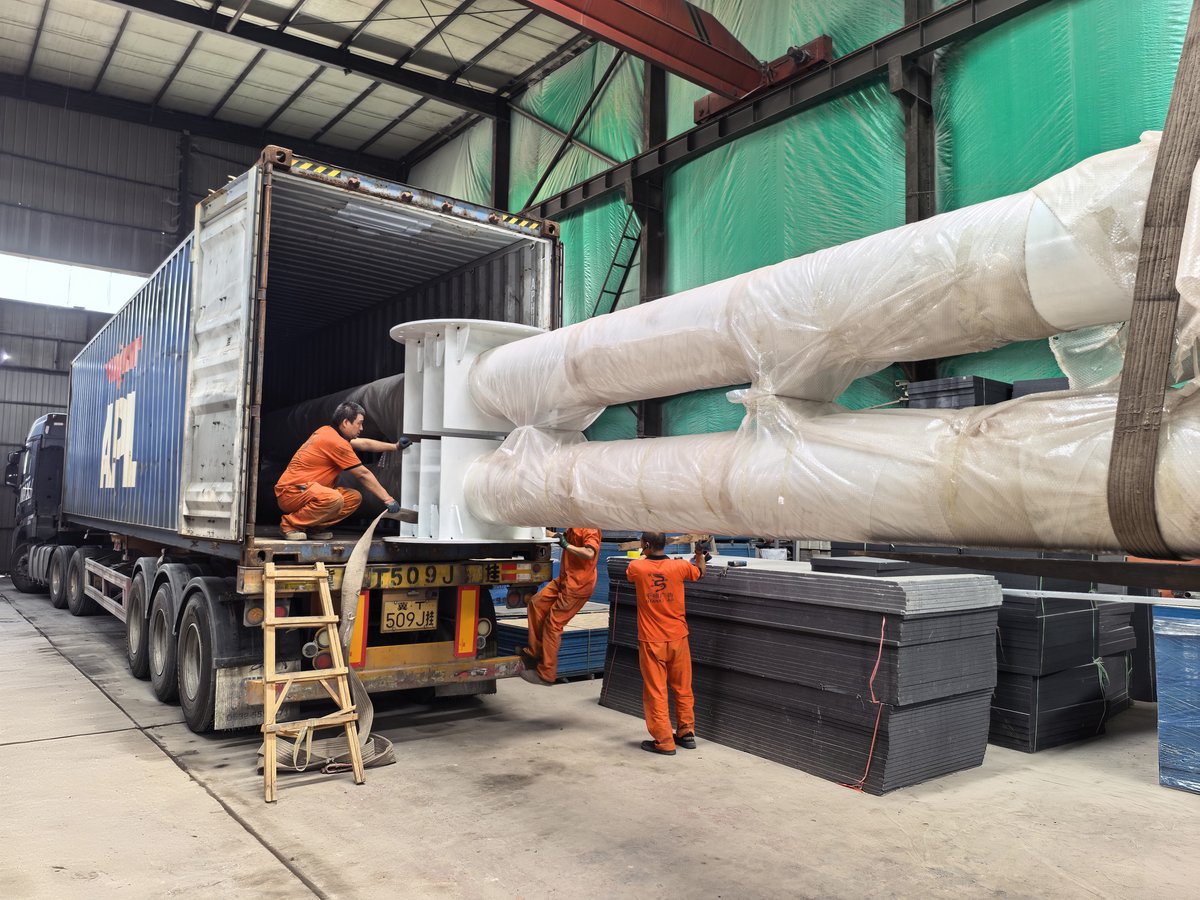
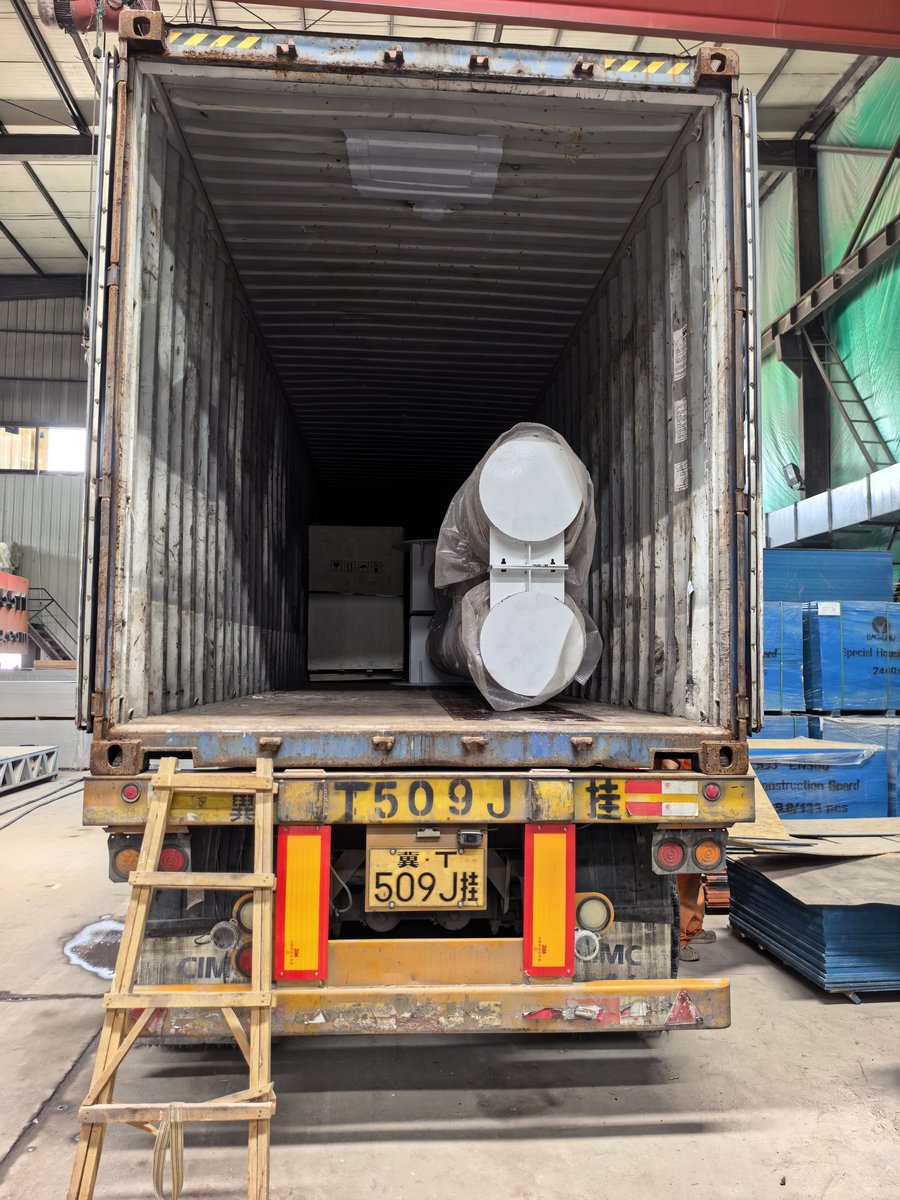
Pole sections in this batch arrived at the loading bay already coated, with flange faces protected. Connection plates, bolts and small fittings were packed into separate bundles and stowed where they could be retrieved first on arrival — the parts needed on day one of erection should never be buried at the far end of a container.
Each bundle carries a label matching the packing list, so the receiving crew can identify components before the container is fully unloaded.
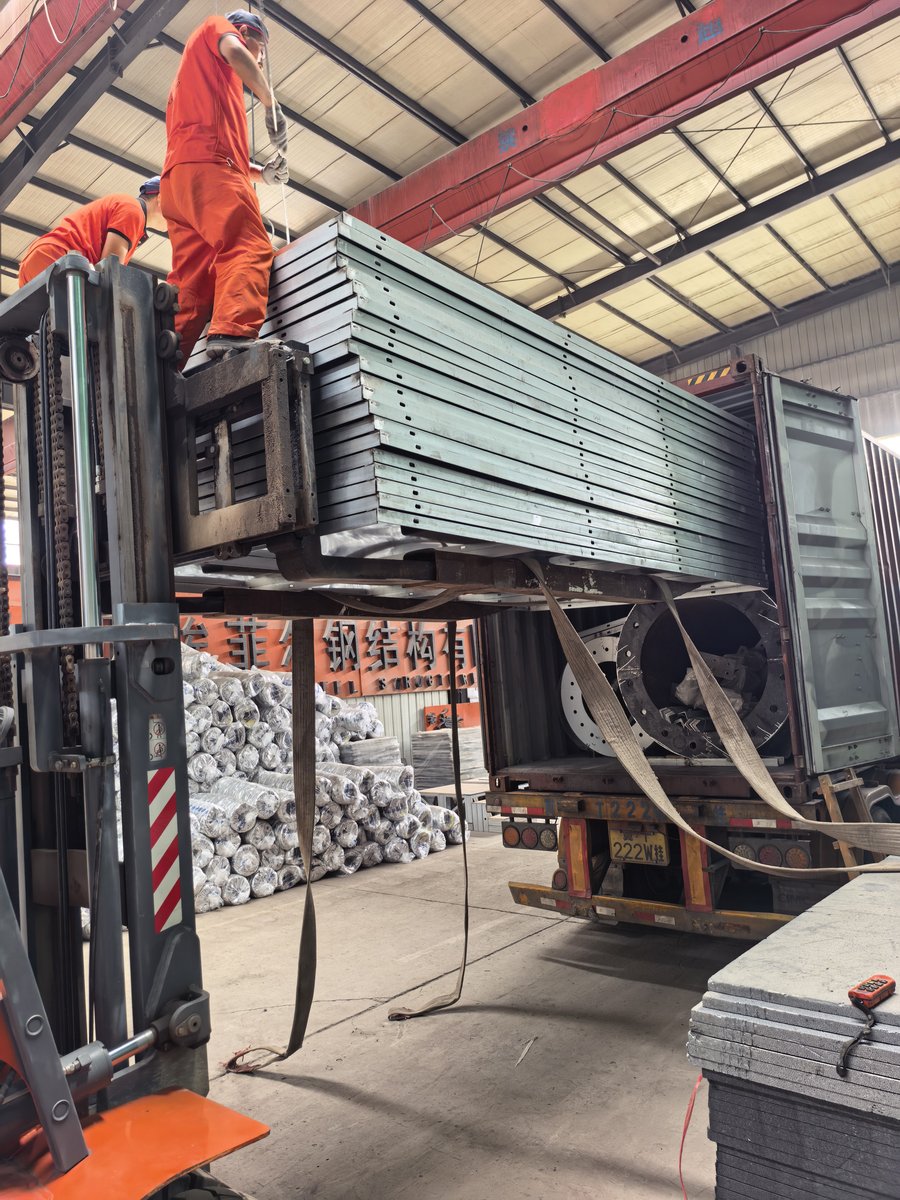
Forklift handling and edge protection
Forklift loading is faster than crane loading for compact members, but it puts concentrated load on the fork contact points. Packing timber is placed at those points before lifting so that the coating and the section edges are not crushed.
The same discipline applies inside the container: every place where steel touches steel has timber between it. It is cheap, it takes an extra hour, and it is the difference between a structure that erects cleanly and one that needs repainting on site.
The end of the season's loading run
Three batches, three loading records, one destination region. Keeping the photographs together makes it possible to compare packing methods across batches and to improve the next one — which is the practical reason this series exists.
All three shipments were built to project drawings, packed for ocean transport and documented at every stage from fabrication to container closure.
Send us your billboard specification — panel size, height, number of faces, wind load and destination port — and we will return a fabrication and packing proposal for your project.
2026 North America export loading series
This loading record is one of three shipments prepared for North American projects in 2026. Each article follows a batch from fabrication and coating through packing and container closure; read together they show how the packing method changes with the type of component.
- May 2026 Container Loading: Unipole Billboard Shafts for North American Projects (16-17 May 2026)
- June 2026 Shipment: Unipole Columns and Wrapped Steel Assemblies for North America (5-7 June 2026)
For a project of your own, send the panel size, mounting height, number of faces, wind load and destination port, and we will reply with a structure proposal and a packing plan.
 How a Billboard Steel Structure Quote Is Priced
 Billboard Structure Inspection: 12-Point Annual Checklist
 Billboard Frame Deflection: What Limits Apply?
 Hot-Dip Galvanising for Billboard Steel: What to Specify
 Steel Grade for Billboard Structures: A36, S355 or Q355?
 Wind Load Design and Installation Essentials for Outdoor Billboard Steel Structures | QX Outdoor
 Offset Cantilever Billboard Planning: Five Questions Before Fabrication
 QIANXI Outdoor Develops Wind-Resistant Engineering Solutions for Long-Term Outdoor Advertising Structures
 QIANXI Outdoor Expands LED Billboard Structure Solutions for Digital Outdoor Advertising Markets