

June 2026 Shipment: Unipole Columns and Wrapped Steel Assemblies for North America
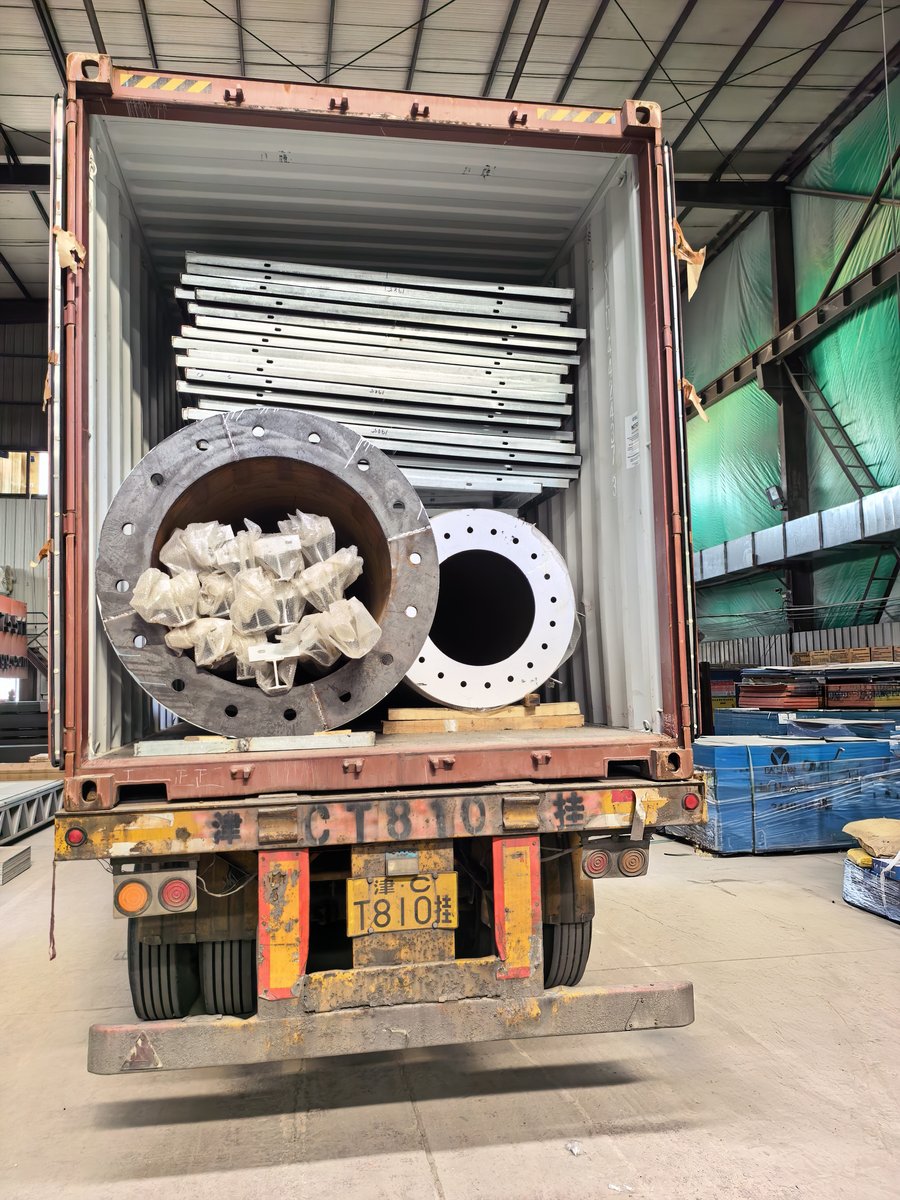
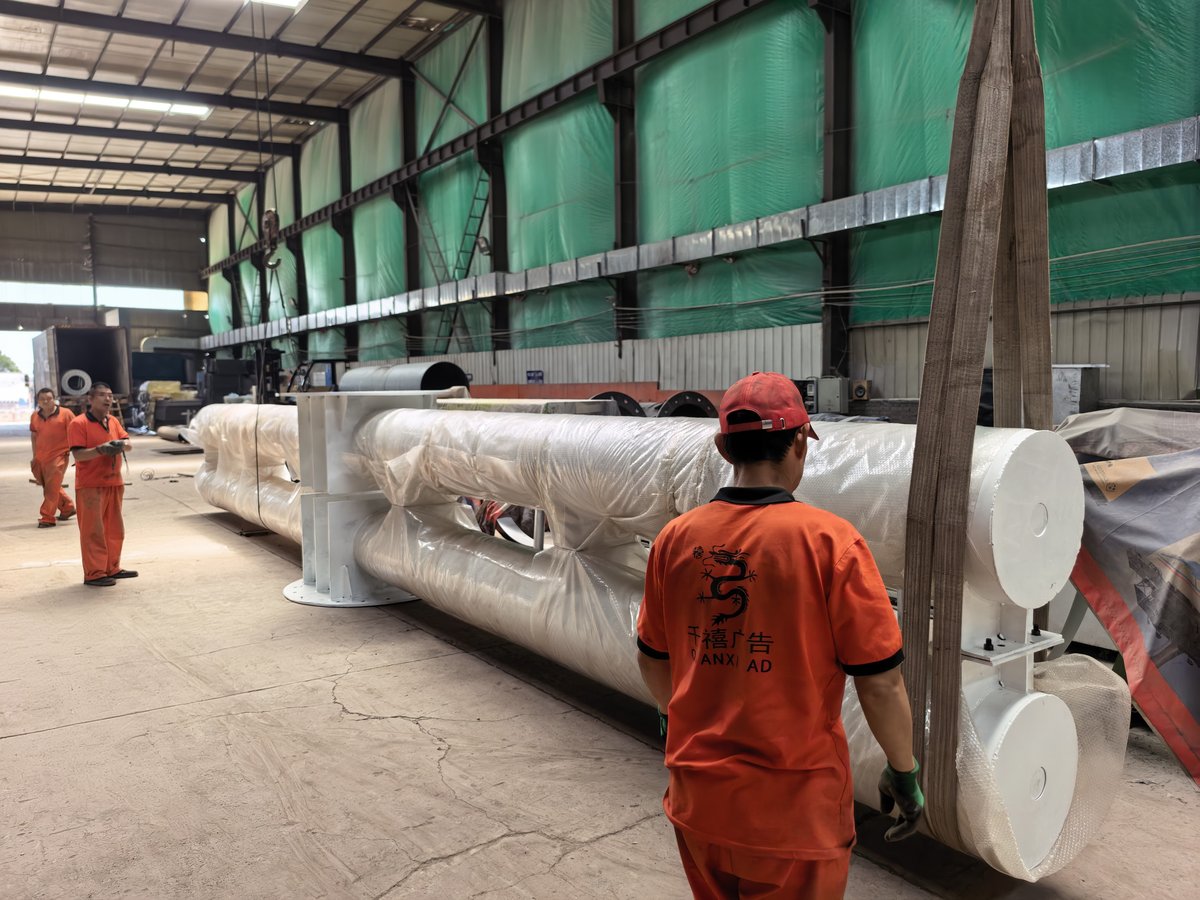
The second batch of the season left the workshop between 5 and 7 June 2026, again for North American projects. This shipment mixed bare-steel columns with fully wrapped assemblies, and the difference in packing method is the most useful thing to look at in the photographs.
Bare columns and wrapped assemblies in one container
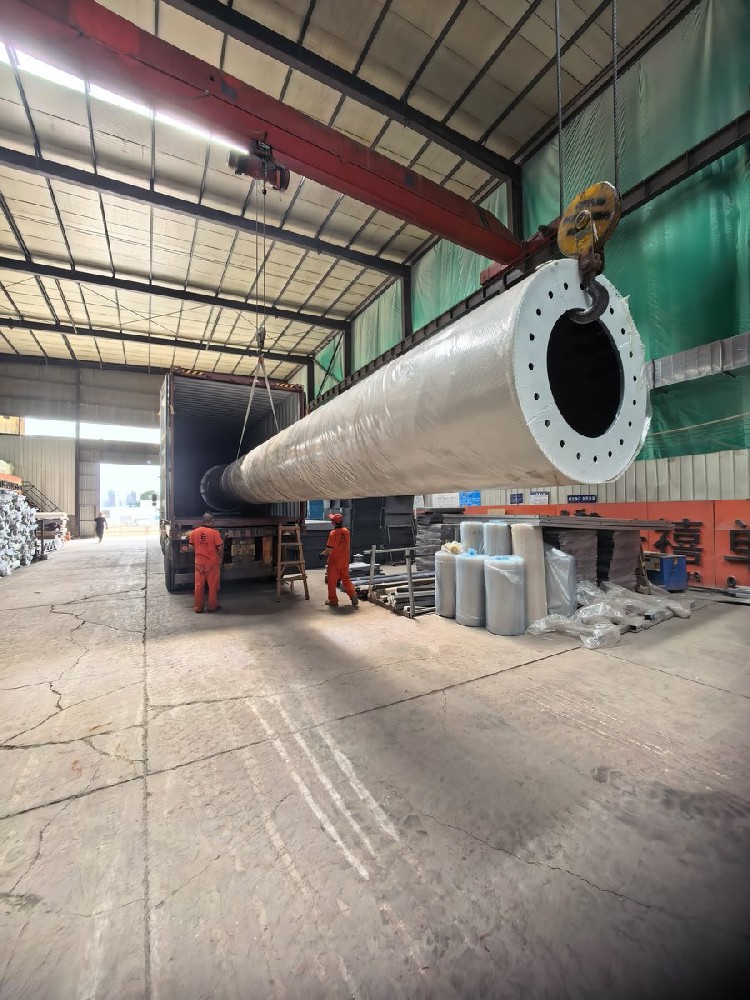
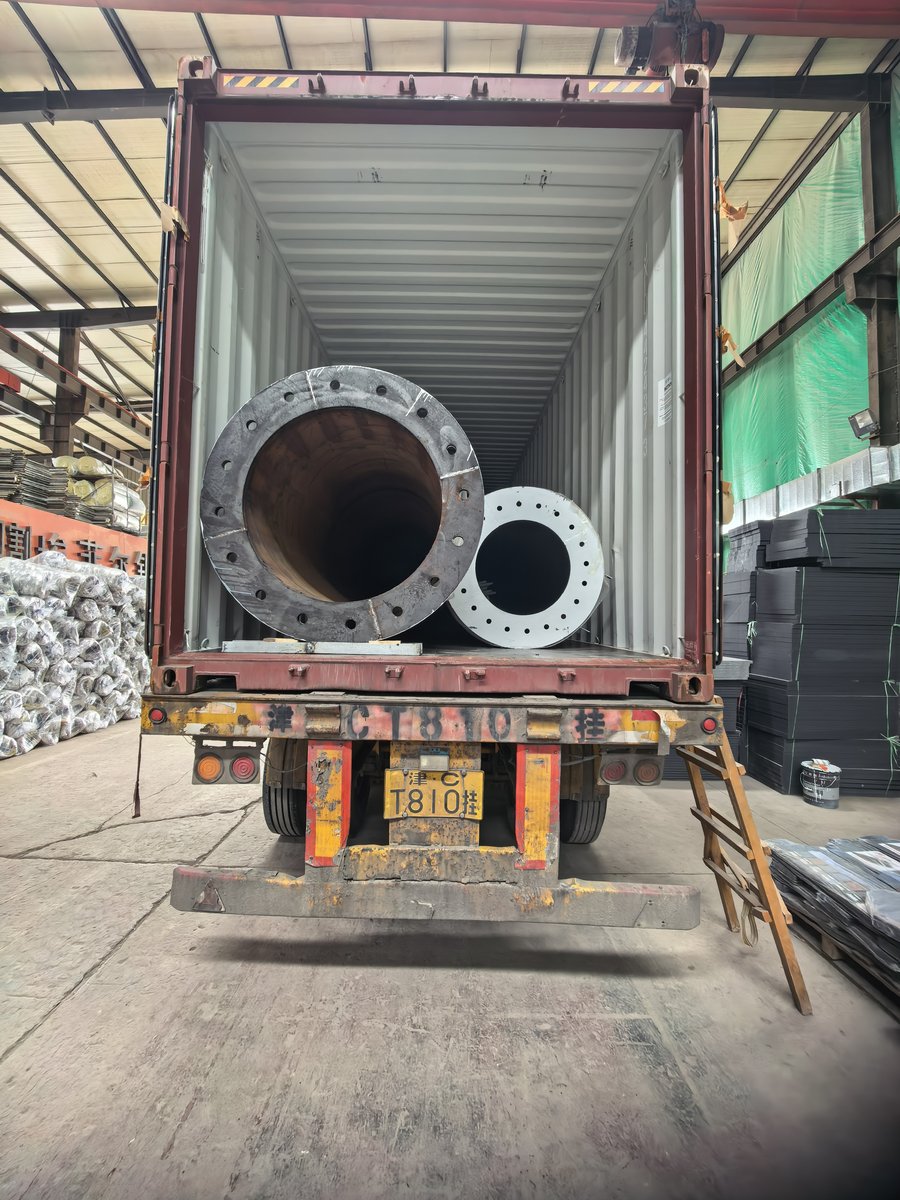
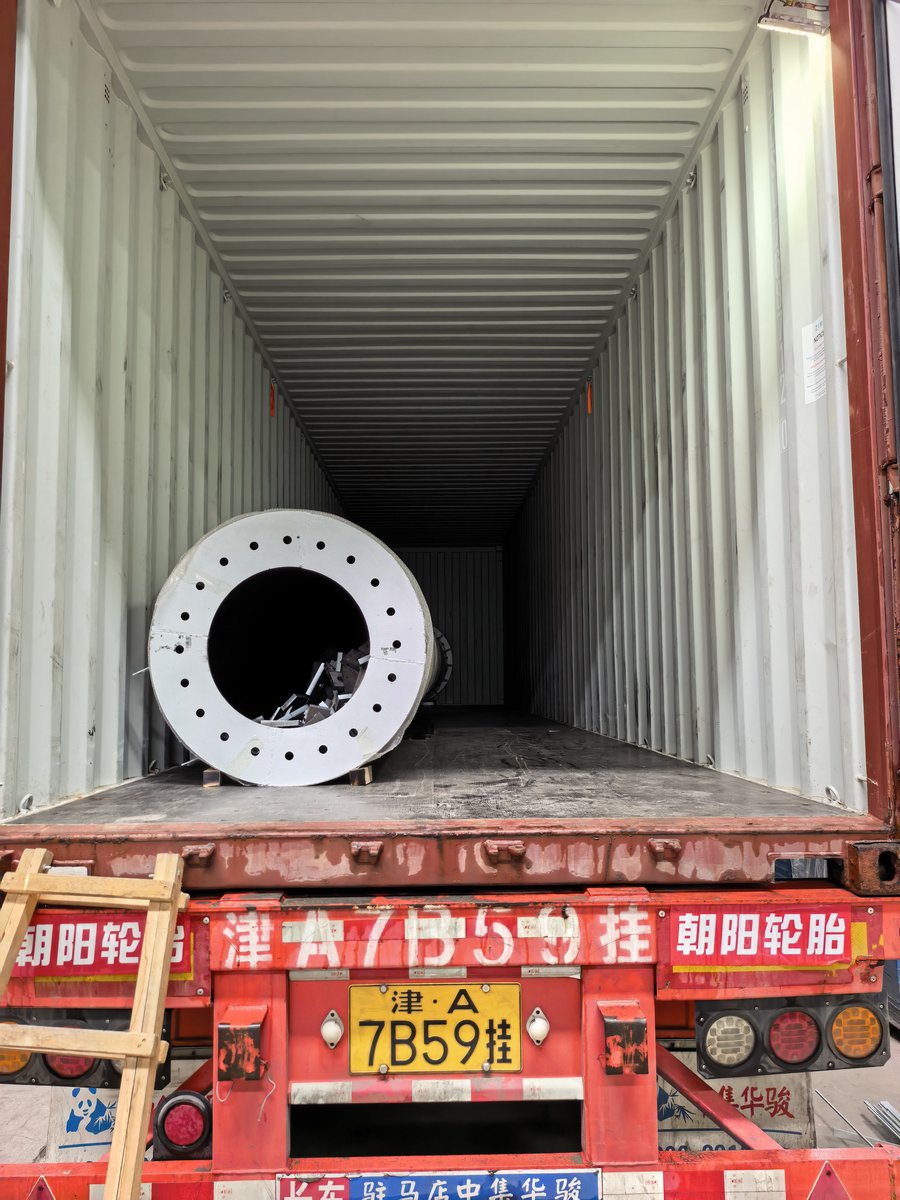
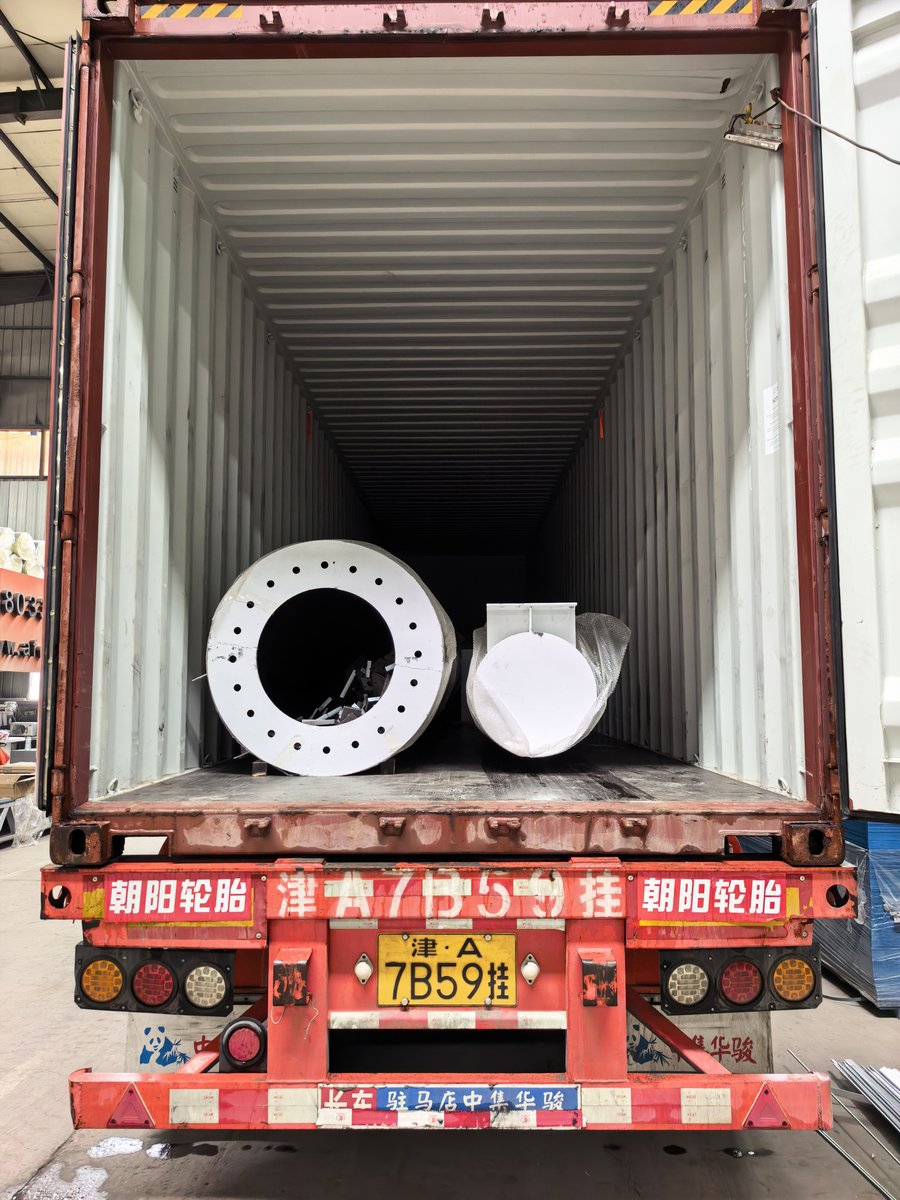
Unipole columns normally travel bare: they are large, rigid and easy to restrain, and wrapping them adds cost without adding protection. Panel frames and fabricated assemblies are the opposite — thin-walled, easily scratched, and awkward to restrain — so they are wrapped before they ever reach the container.
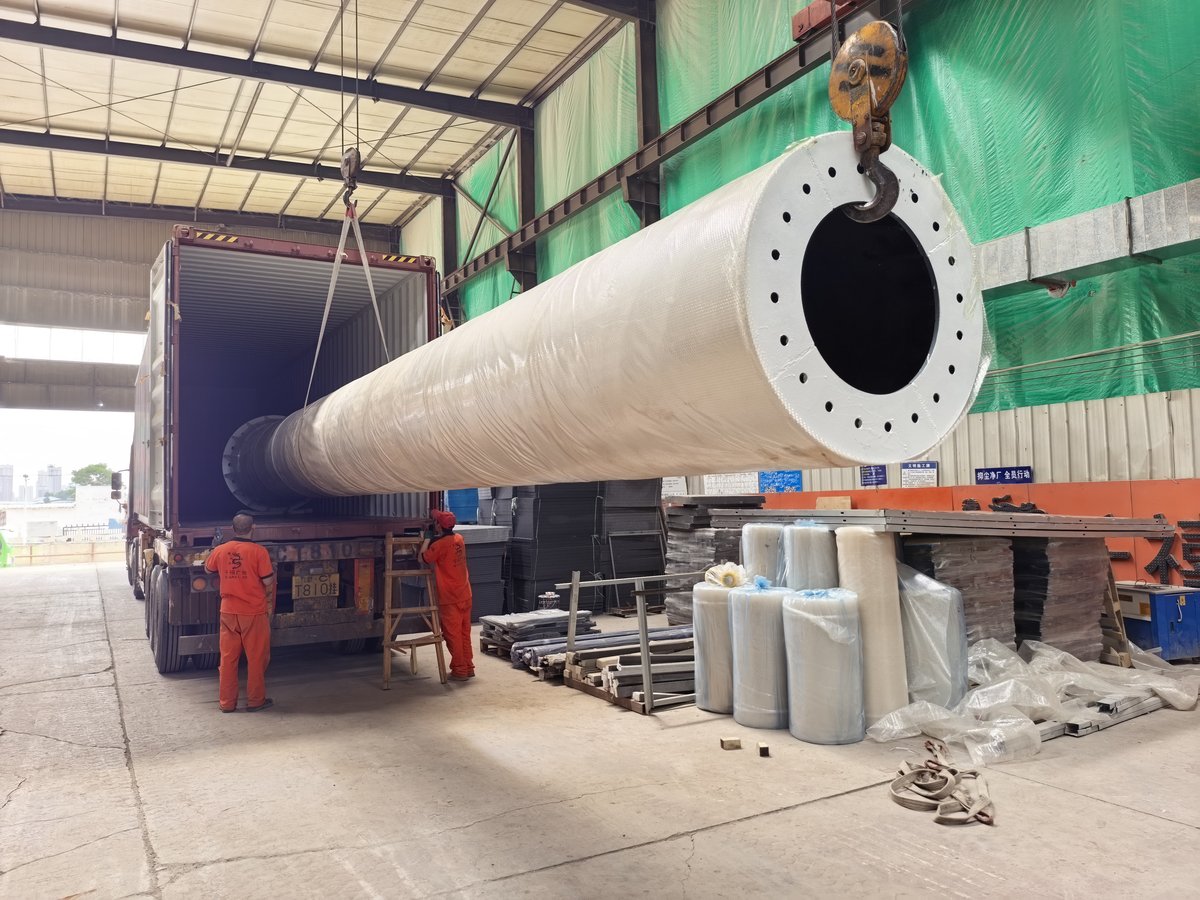
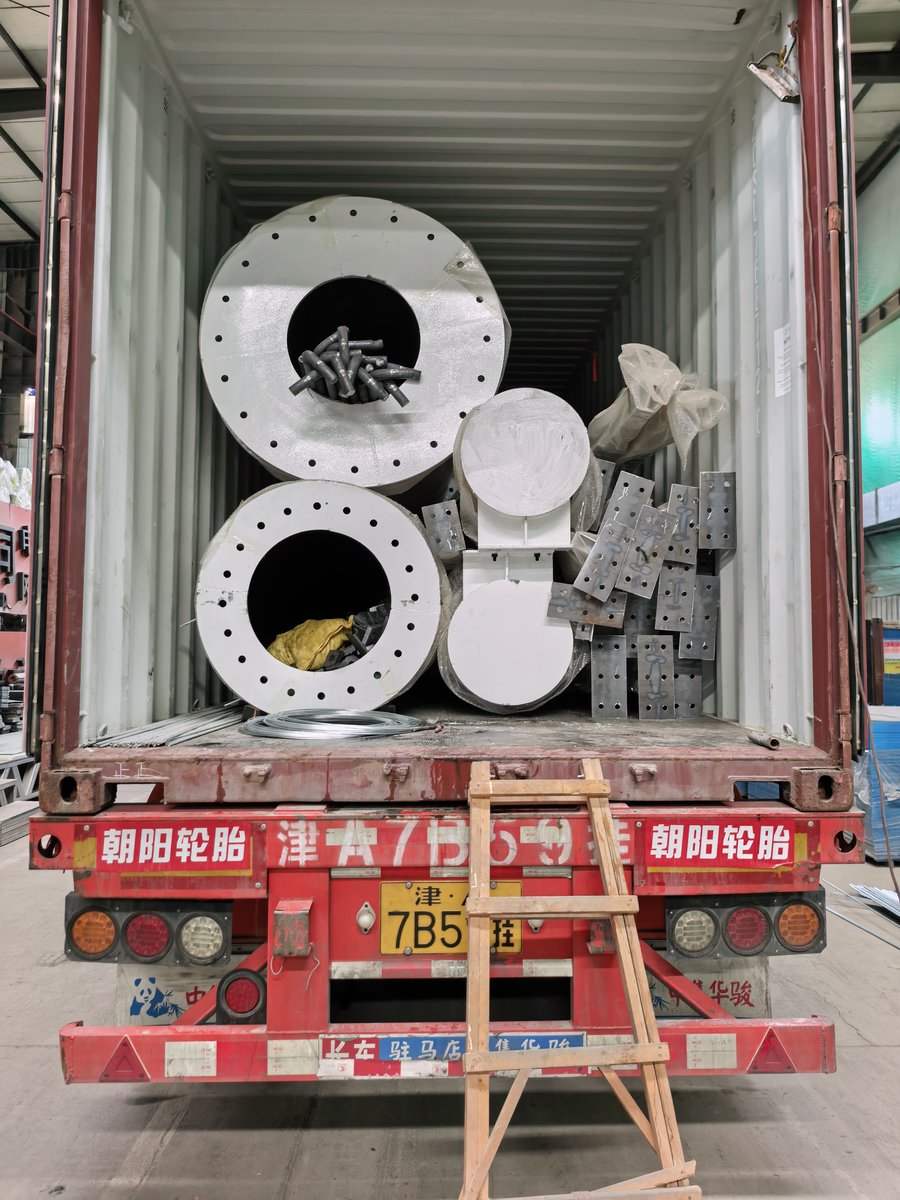
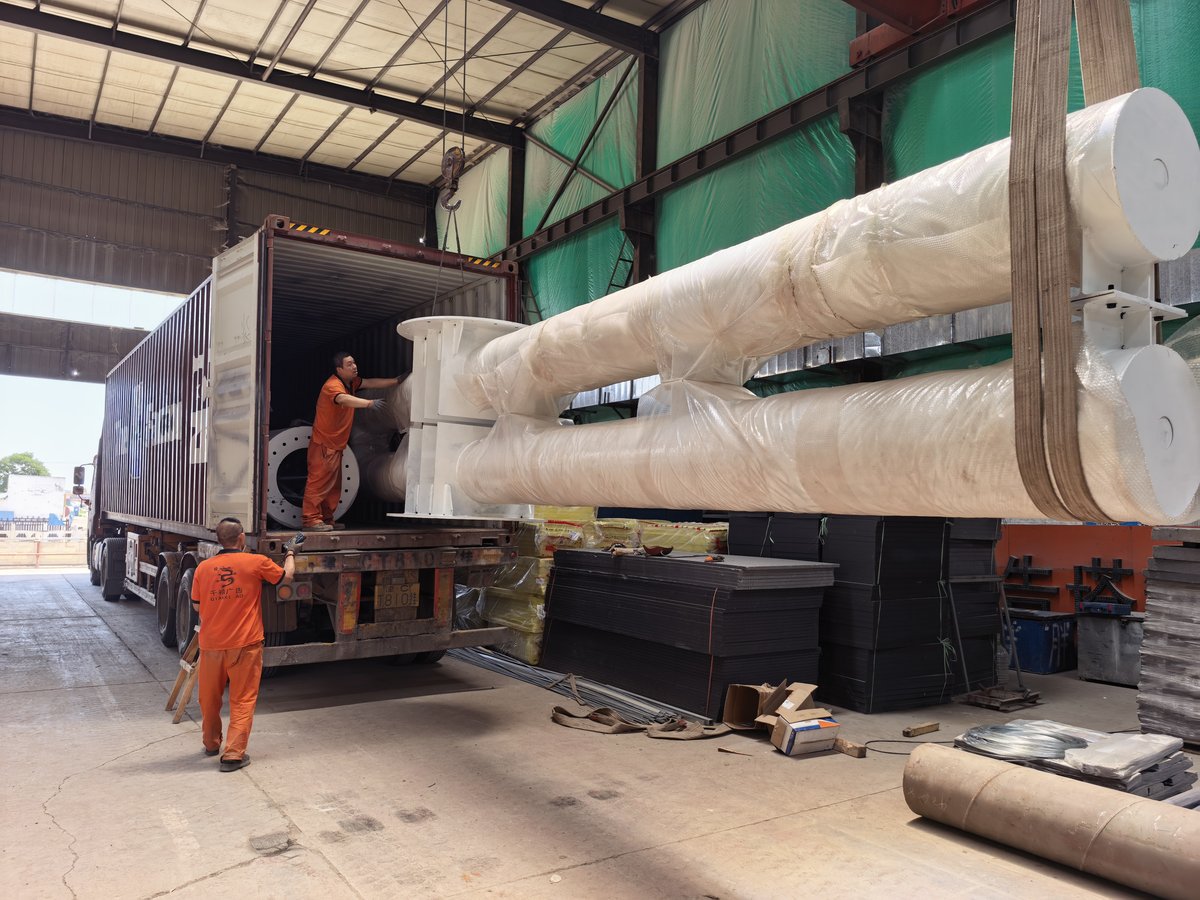
In this batch both types share the same shipment. The columns are lifted by overhead crane and stowed along the container axis; the wrapped assemblies are handled as complete units, bound with stretch film over timber protection and lifted with slings positioned clear of the film.
Flange ends and connection faces
The flange at the base of each column is the interface between the structure and the foundation. It is drilled to the anchor-bolt template for the specific project, and its face is kept clean through fabrication, painting, packing and loading.
Photographs of the flange end are taken at each stage. If an anchor template is questioned on site months later, the workshop record shows what was actually drilled and shipped.
Why wrapping matters more than it looks
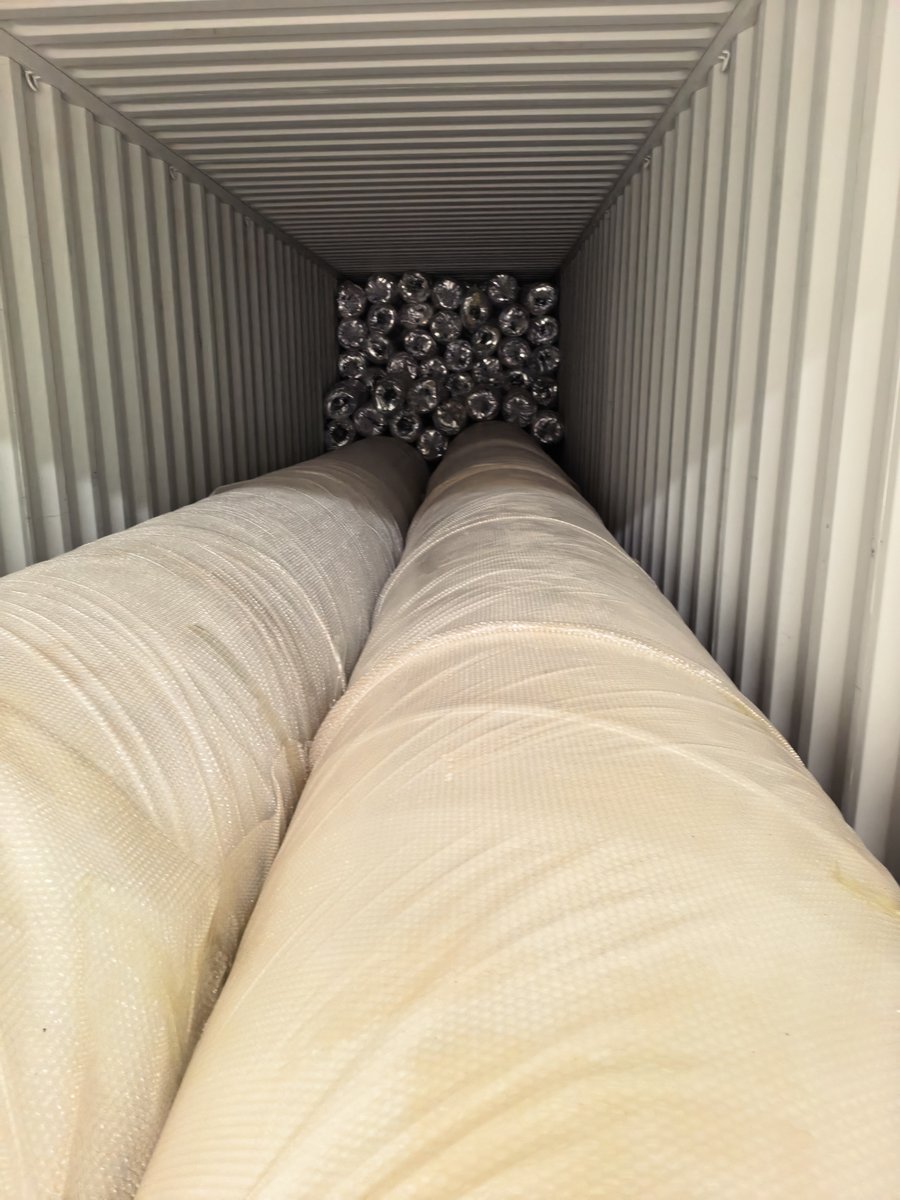
Ocean freight exposes steel to condensation, salt and constant low-level movement. Stretch film alone does not stop corrosion, but combined with a coated surface, timber separation and a dry container it prevents the abrasion that starts most rust patches.
Wrapping also keeps assemblies together. A panel frame shipped as loose members invites missing parts and improvised site welding; shipped as a wrapped unit it arrives as the drawing intended.
Loading sequence
Loading started with the longest columns, placed low and parallel to the container walls. Wrapped assemblies followed, packed into the remaining volume with timber blocking so that nothing can slide forward under braking or heavy sea motion.
The container was closed only after the load was checked against the packing list and the door area cleared — the last thing anyone wants is a component that shifts into the doors during the voyage.
Tell us the panel dimensions, the number of faces and the wind load for your site, and we will propose a column and frame arrangement together with a packing method suited to your port and transport route.
2026 North America export loading series
This loading record is one of three shipments prepared for North American projects in 2026. Each article follows a batch from fabrication and coating through packing and container closure; read together they show how the packing method changes with the type of component.
- May 2026 Container Loading: Unipole Billboard Shafts for North American Projects (16-17 May 2026)
- July 2026 Shipment: Billboard Steel Frames and Pole Sections Bound for North America (end of June 2026)
For a project of your own, send the panel size, mounting height, number of faces, wind load and destination port, and we will reply with a structure proposal and a packing plan.
 How a Billboard Steel Structure Quote Is Priced
 Billboard Structure Inspection: 12-Point Annual Checklist
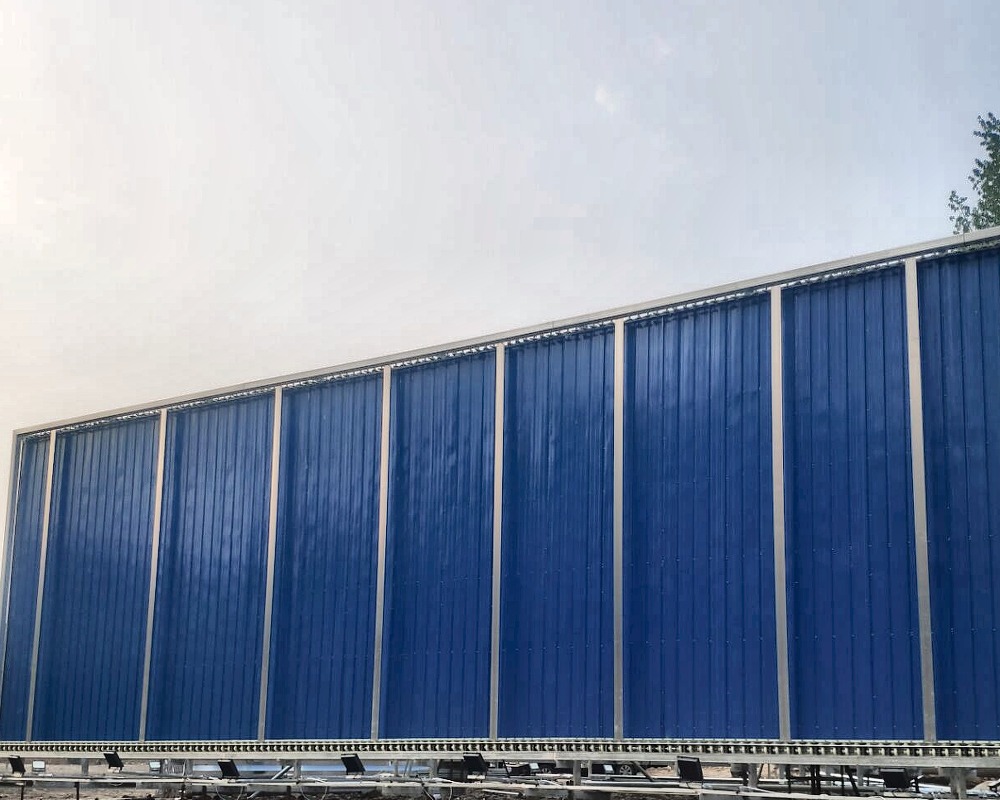 Billboard Frame Deflection: What Limits Apply?
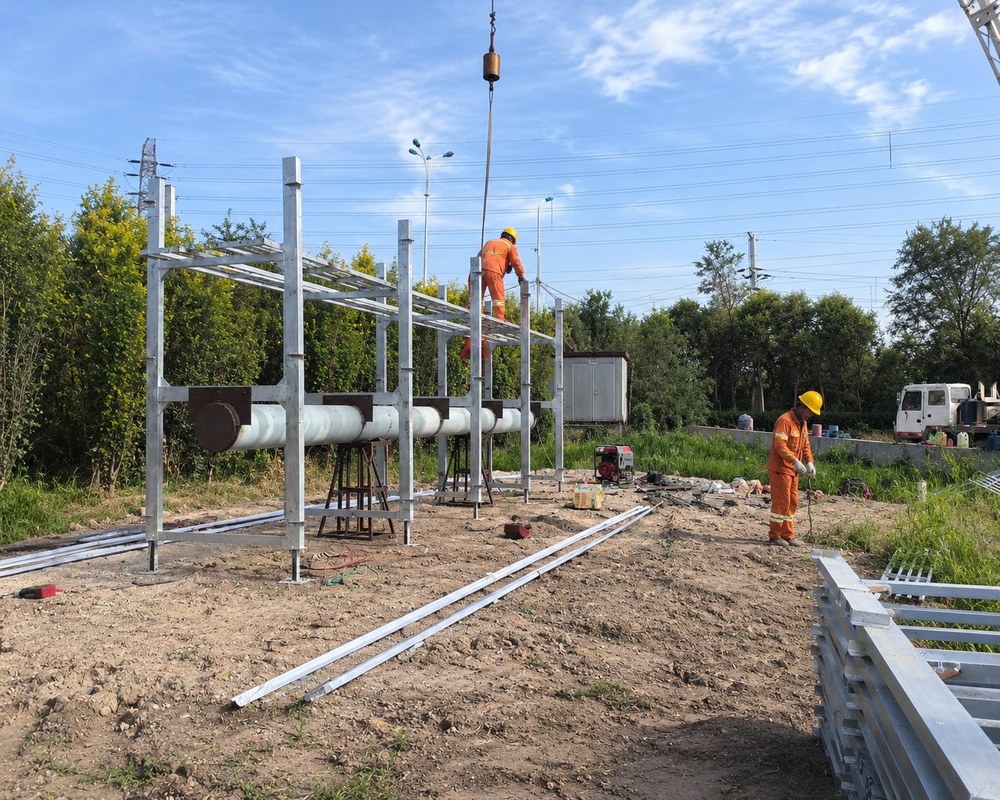 Hot-Dip Galvanising for Billboard Steel: What to Specify
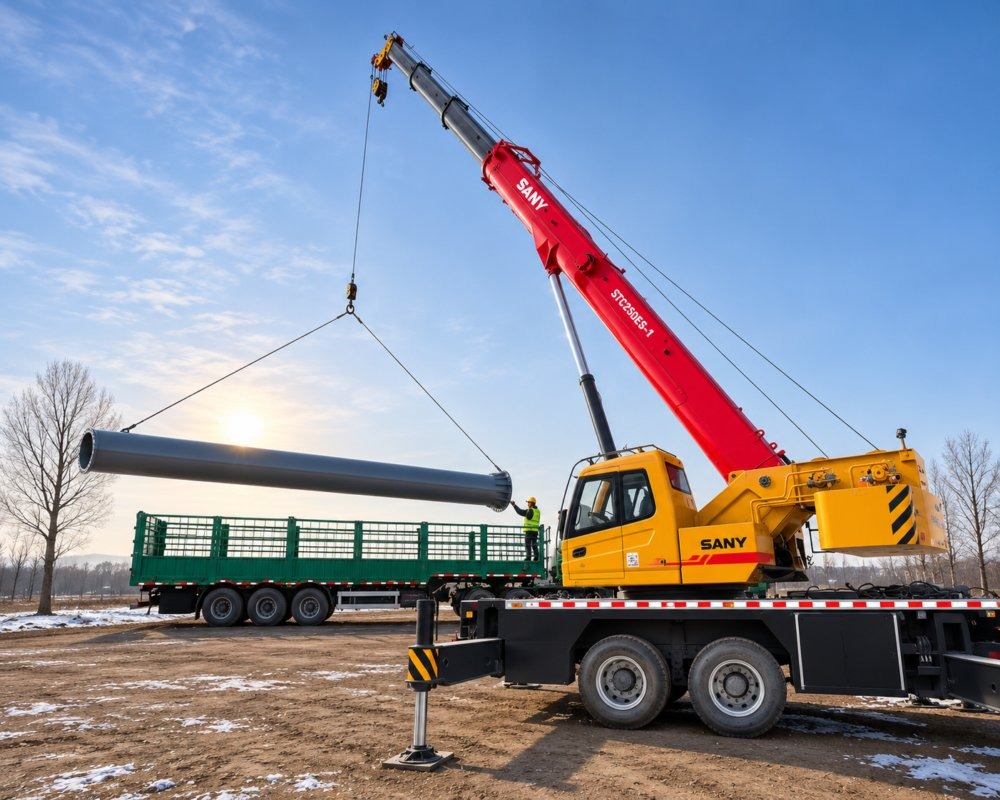 Steel Grade for Billboard Structures: A36, S355 or Q355?
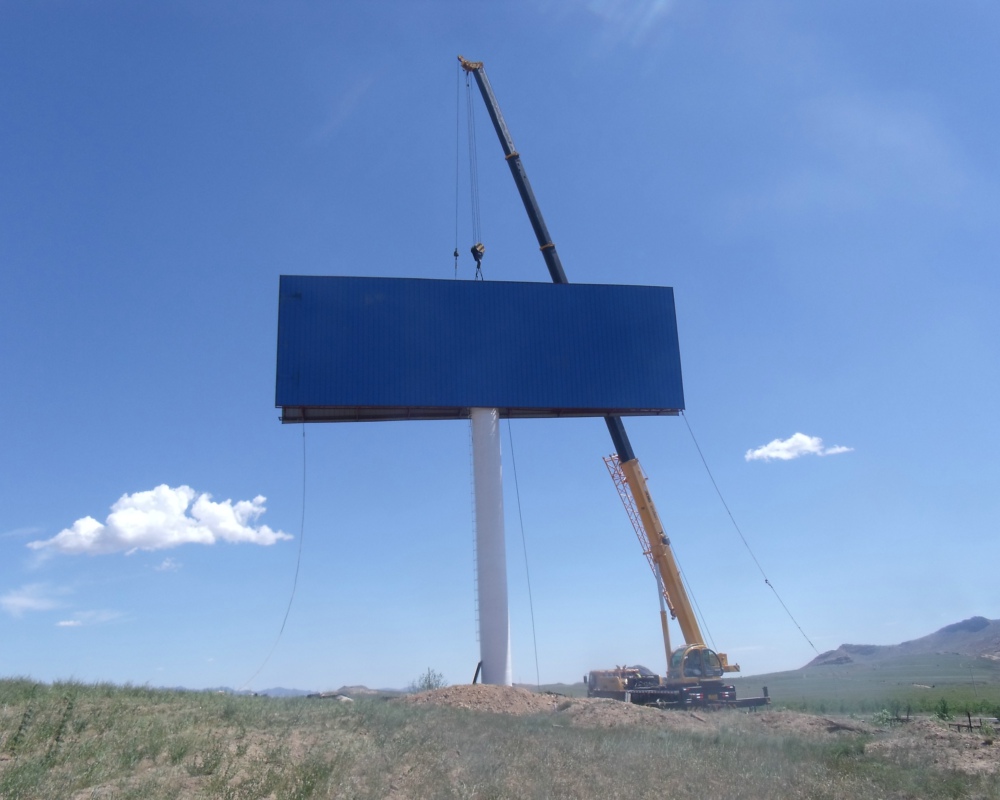 Wind Load Design and Installation Essentials for Outdoor Billboard Steel Structures | QX Outdoor
 Offset Cantilever Billboard Planning: Five Questions Before Fabrication
 QIANXI Outdoor Develops Wind-Resistant Engineering Solutions for Long-Term Outdoor Advertising Structures
 QIANXI Outdoor Expands LED Billboard Structure Solutions for Digital Outdoor Advertising Markets