

May 2026 Container Loading: Unipole Billboard Shafts for North American Projects
Between 16 and 17 May 2026 the workshop completed and loaded one batch of unipole billboard components for projects in North America. The photographs below follow the batch from fabrication bay to closed container door — the stage where most export problems are actually decided, long before a structure reaches the site.
What the batch contains
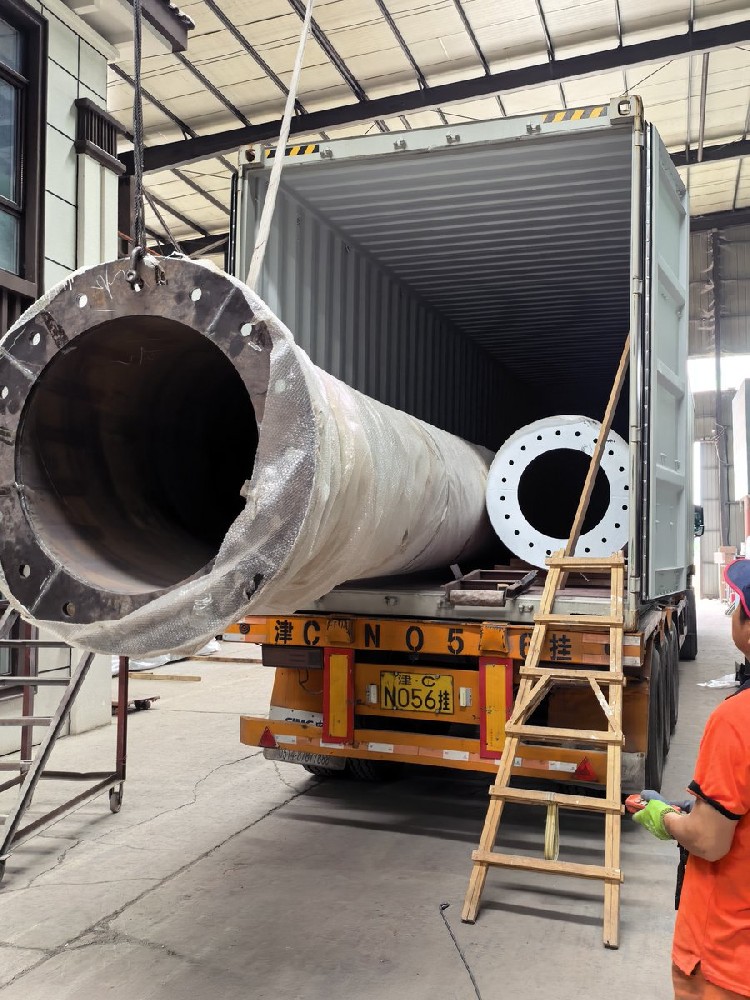
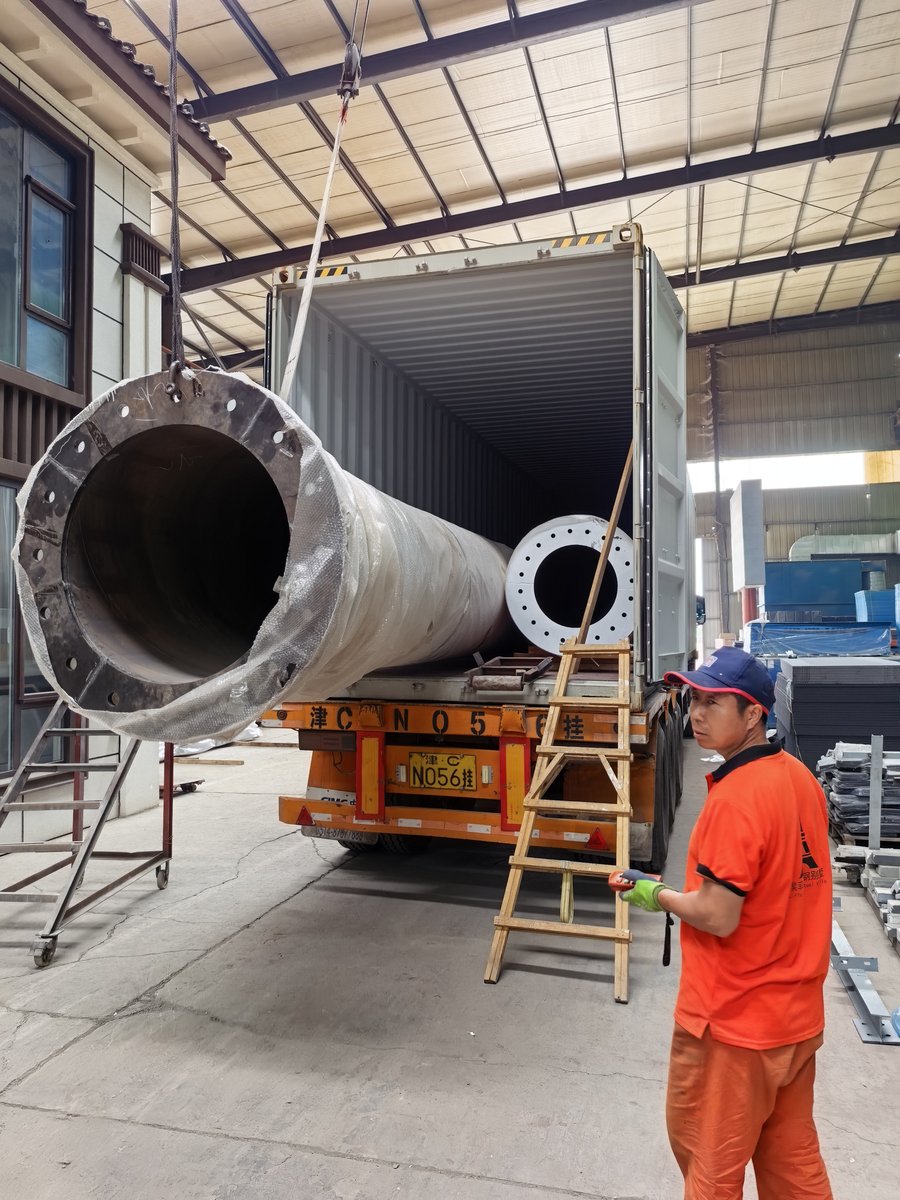
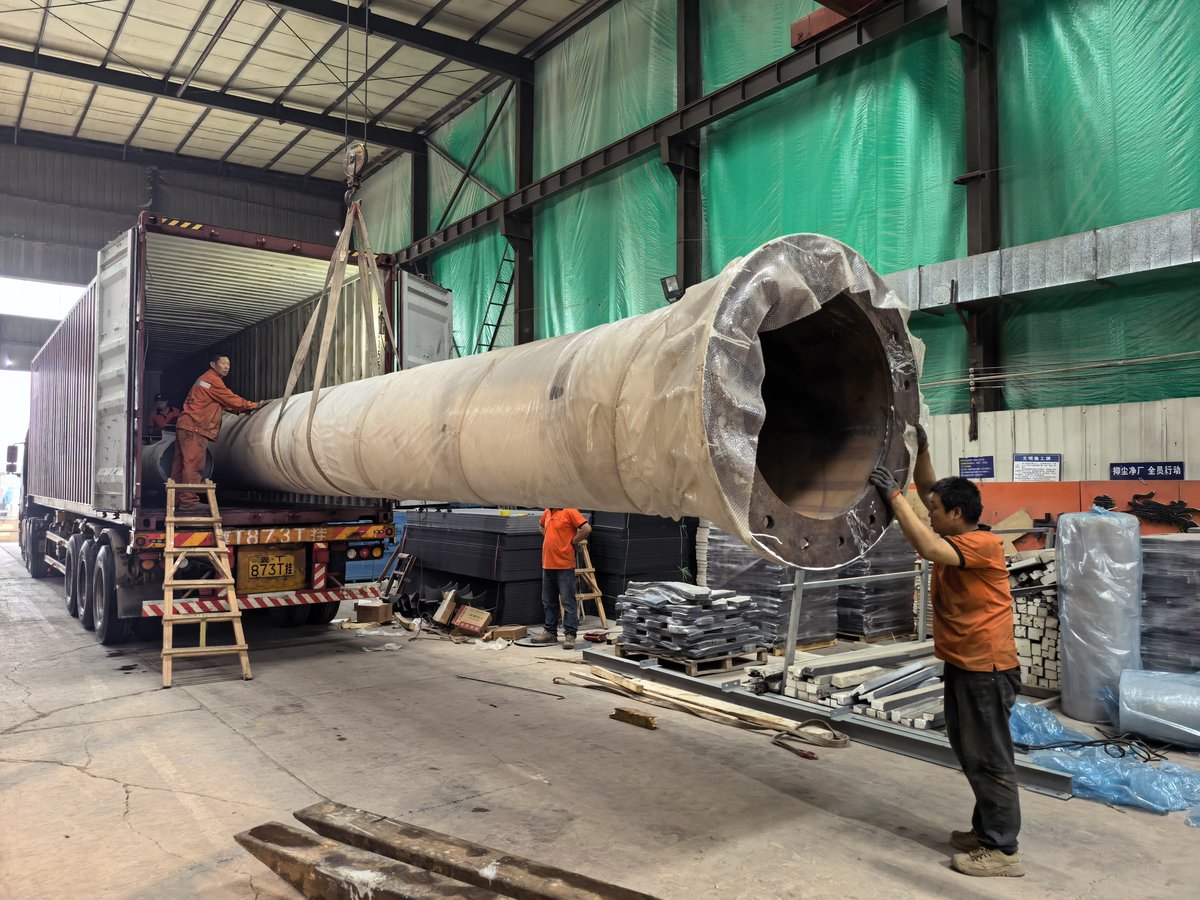
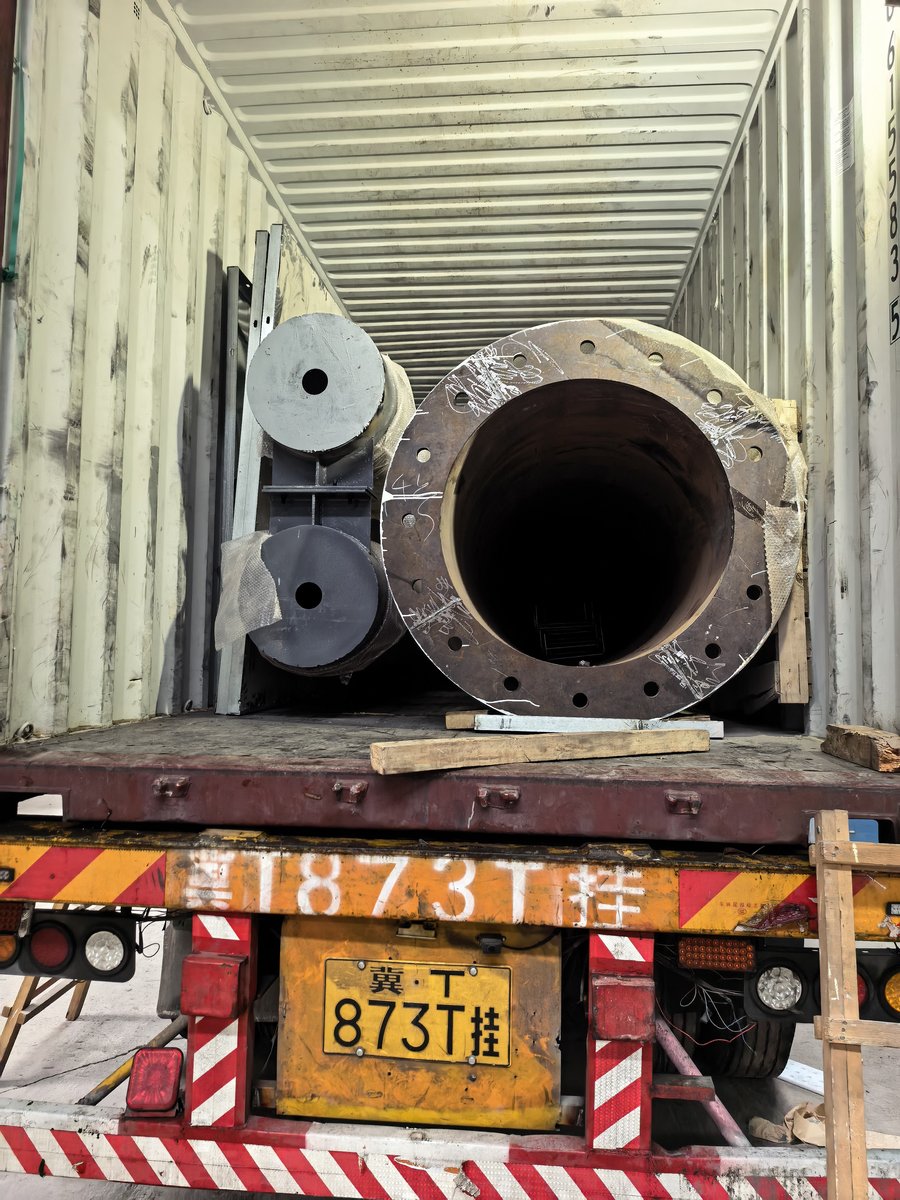
The core of the shipment is the unipole shaft: a large-diameter welded steel tube that carries the entire wind load of an advertising panel. Each shaft leaves the workshop with a machined flange at the connection end, so that the pole sections and the panel frame bolt together on site instead of being welded in the air.
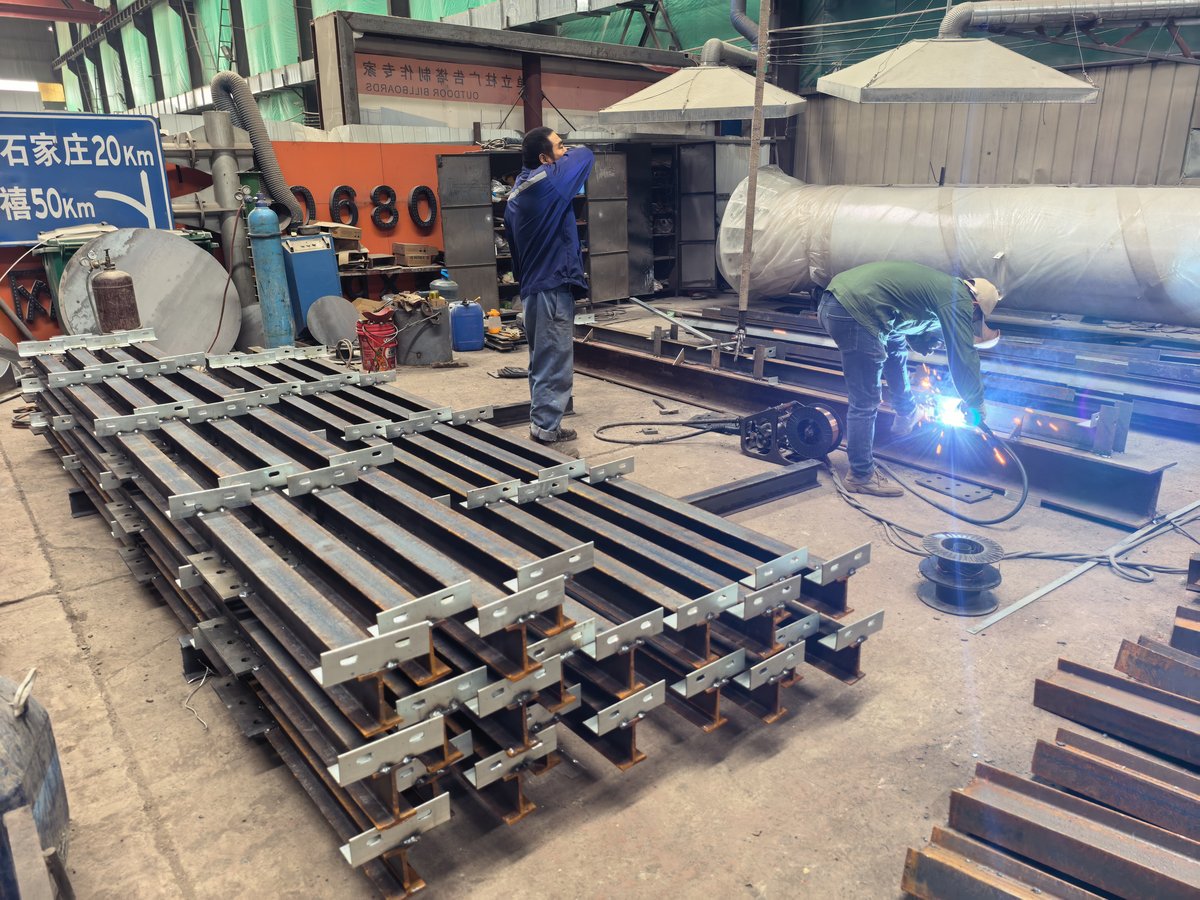
Alongside the shafts the batch includes support beams and secondary steel for the panel framing, cut and drilled to the drawing set for each project. Keeping the straight shafts and the built-up beams in one shipment means the erecting crew receives matching components rather than a partial structure.
Fabrication before packing
Shafts are formed, longitudinally welded and then checked for straightness before the flange is offered up and welded in place. Flange faces are the reference for the whole structure, so they are protected during handling and never used as a bearing surface for lifting gear.
Surface preparation and painting follow the specification agreed for each order. In the photographs the coated shafts are already resting on timber bearers, clear of the floor, waiting for the packing crew.
Packing for ocean freight
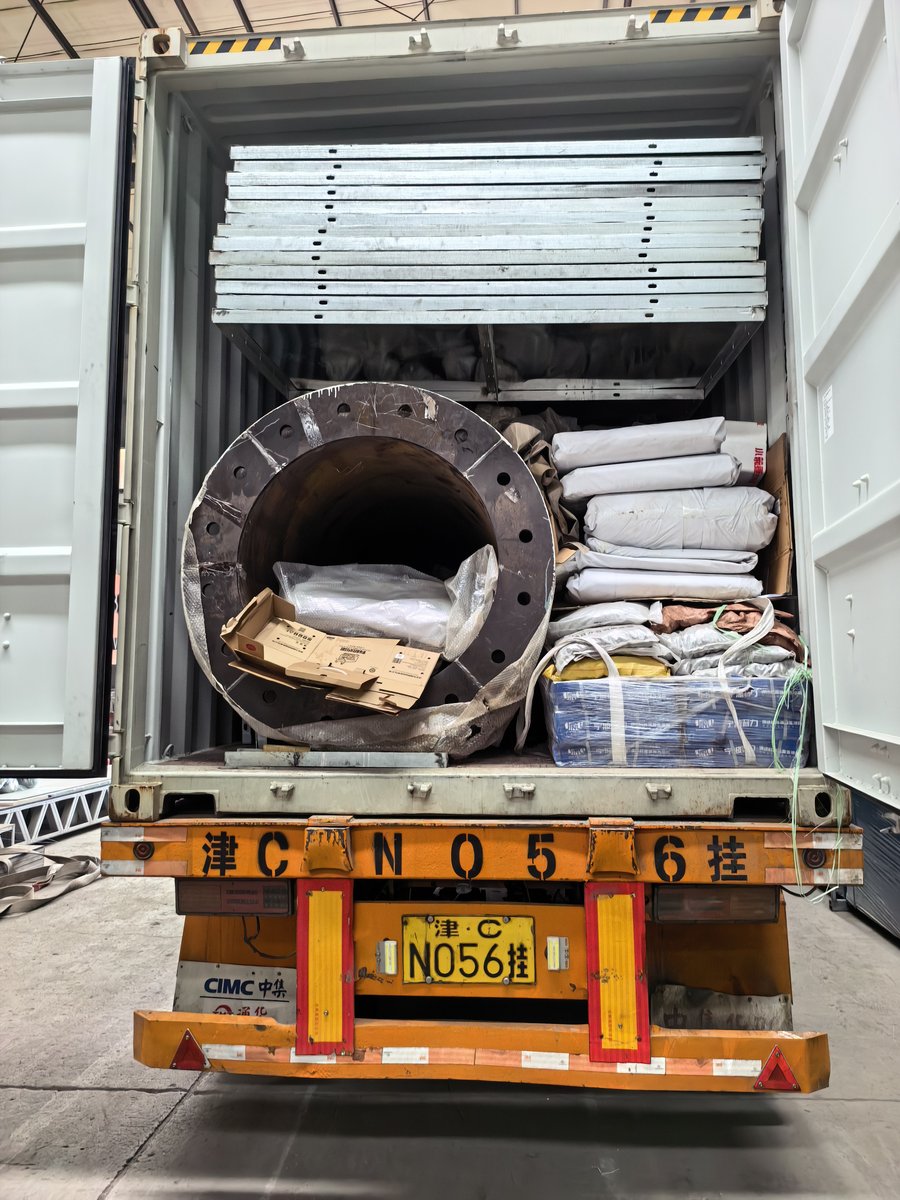
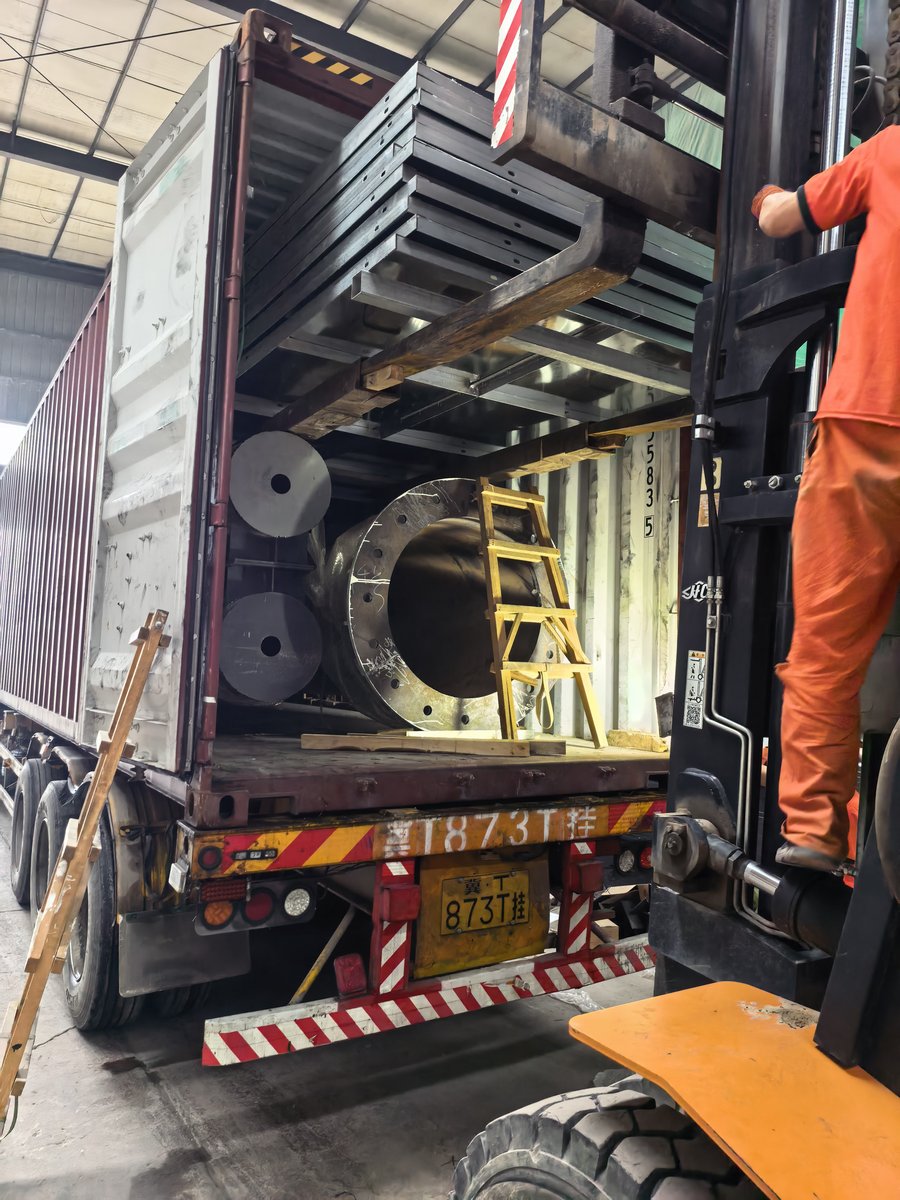
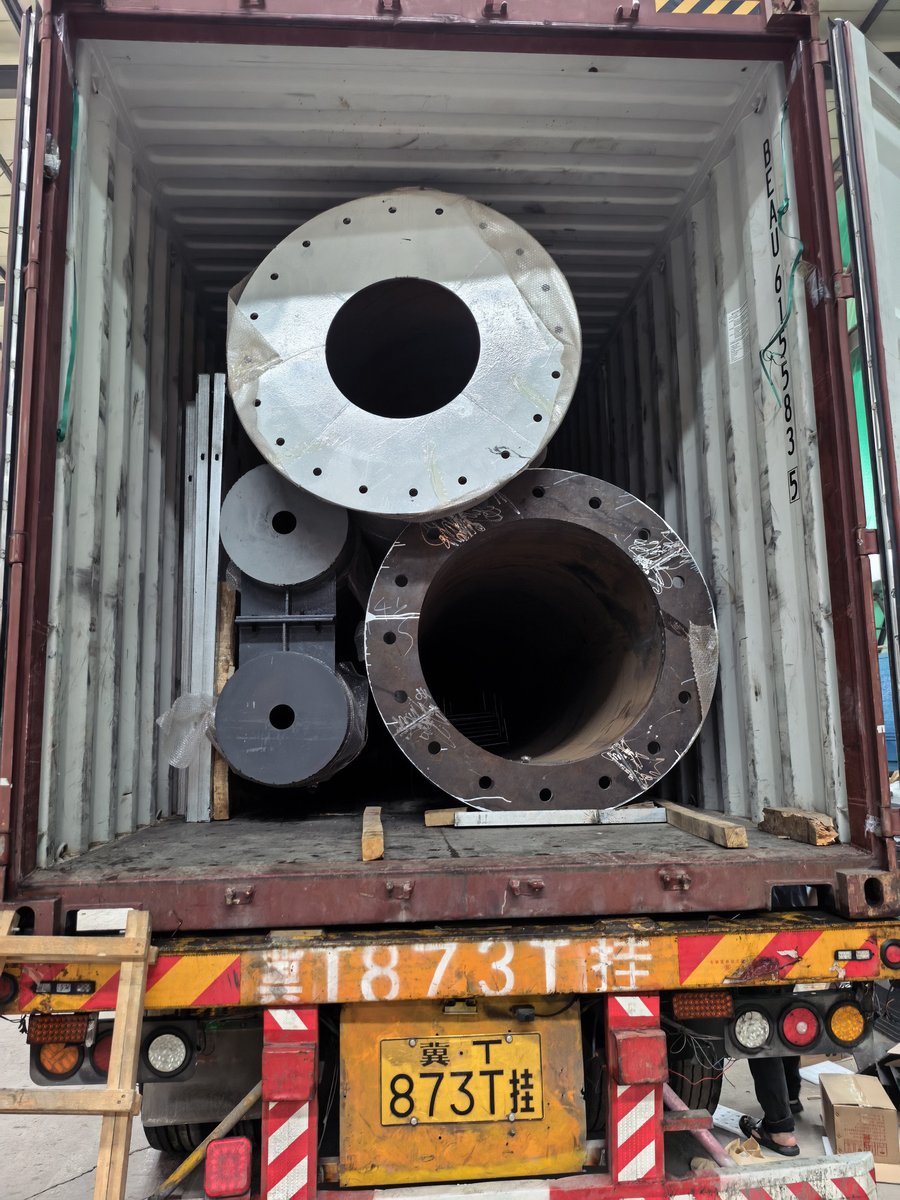
Long steel components travel badly if they are simply laid in a container. The shafts are lifted with an overhead crane and lowered into the container in sequence, separated by timber dunnage so that paint and flange faces are not damaged by contact or by vibration during the voyage.
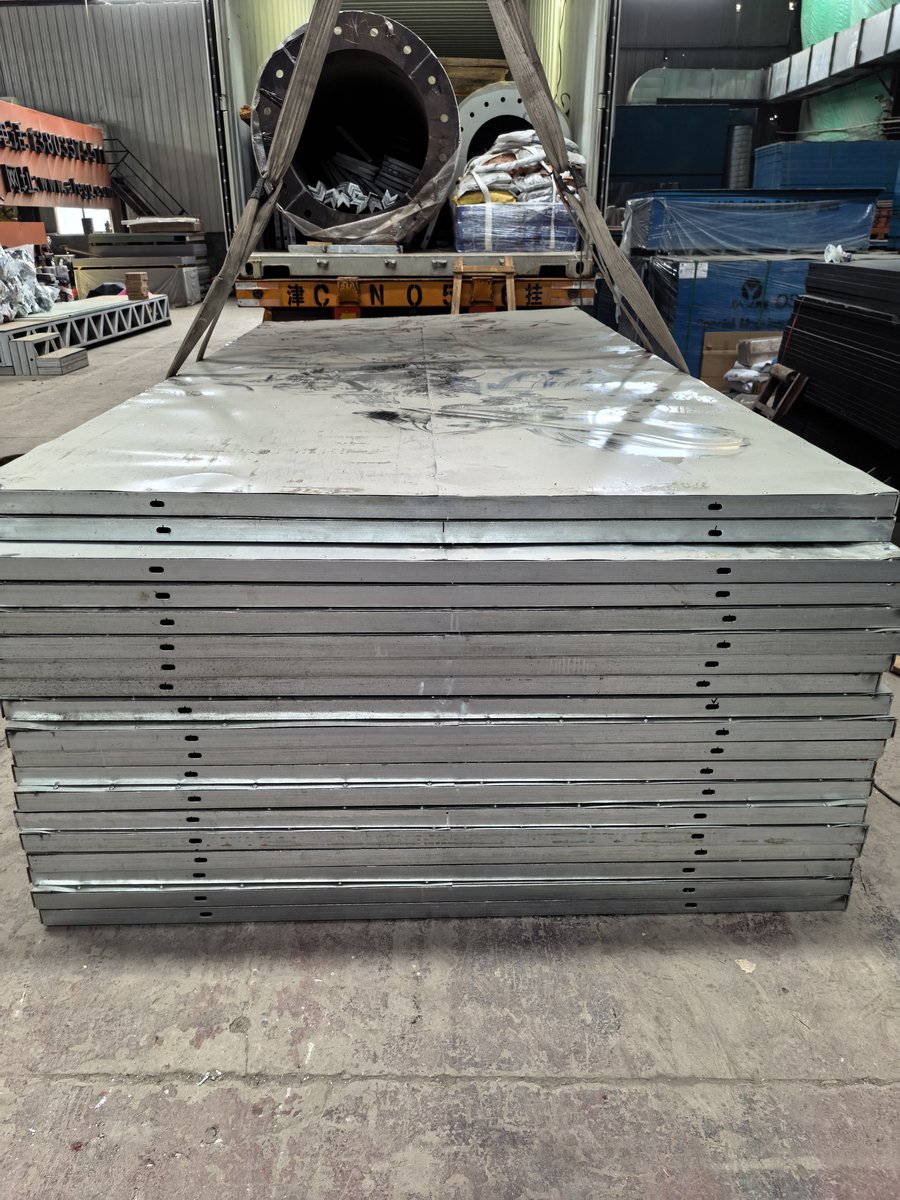
Smaller components — flanges, connection plates, bolts and fittings — are bundled and packed separately, then placed where they cannot move against the coated shafts. Every bundle is labelled so that the receiving end can match it to the packing list without unpacking the whole container.
Closing the container
The loading sequence is planned before the first lift: heavy shafts low and along the container axis, lighter framing above and around them. The last photographs show the container filled to the door with the load restrained, ready for sealing.
A photo record like this one is kept for every batch. If a component arrives damaged, the loading photographs show exactly how it was stowed, which settles most claims quickly and points to the real cause.
If you are planning an outdoor advertising structure for a North American site, send us the panel size, mounting height and wind load requirement. We will reply with a structure proposal and a packing plan for your shipping method.
2026 North America export loading series
This loading record is one of three shipments prepared for North American projects in 2026. Each article follows a batch from fabrication and coating through packing and container closure; read together they show how the packing method changes with the type of component.
- June 2026 Shipment: Unipole Columns and Wrapped Steel Assemblies for North America (5-7 June 2026)
- July 2026 Shipment: Billboard Steel Frames and Pole Sections Bound for North America (end of June 2026)
For a project of your own, send the panel size, mounting height, number of faces, wind load and destination port, and we will reply with a structure proposal and a packing plan.
 How a Billboard Steel Structure Quote Is Priced
 Billboard Structure Inspection: 12-Point Annual Checklist
 Billboard Frame Deflection: What Limits Apply?
 Hot-Dip Galvanising for Billboard Steel: What to Specify
 Steel Grade for Billboard Structures: A36, S355 or Q355?
 Wind Load Design and Installation Essentials for Outdoor Billboard Steel Structures | QX Outdoor
 Offset Cantilever Billboard Planning: Five Questions Before Fabrication
 QIANXI Outdoor Develops Wind-Resistant Engineering Solutions for Long-Term Outdoor Advertising Structures
 QIANXI Outdoor Expands LED Billboard Structure Solutions for Digital Outdoor Advertising Markets