

Rooftop and Wall-Mounted Billboard Structures: Engineering Checks, Waterproofing and Installation
Rooftop and wall-mounted billboards allow advertisers to reach city audiences without buying land, but they also ask the host building to carry loads it was never designed for. That makes the engineering review more demanding than on a ground-mounted structure, and it makes waterproofing a detail that deserves the same attention as the steel frame itself.

Two Different Load Paths: Rooftop and Wall-Mounted
The two configurations transfer load into the building in different ways. Rooftop structures are supported by the roof slab or by the building core, so the critical checks are local slab punching, beam capacity and the way the wind moment travels down through the roof structure. Wall-mounted billboards are anchored to columns, beams or load-bearing walls, and the critical issue is how the bracket pulls on the facade.
Both cases share the same principle: the wind load has to reach the building structure, not the finishes.
Structural Verification of the Host Building
Before fabrication, the following information is normally reviewed together with the customer or the local structural engineer:
- As-built drawings, or at least the construction age and structural system of the building
- Position of beams, columns and shear walls where the frame can be anchored
- Permissible additional load on the roof slab, including ballast weight
- Parapet height and condition, and whether the frame can be tied back to it
- Wind exposure of the site, considering surrounding buildings and terrain
- Seismic requirements and any local structural regulations
Where drawings are not available, a site survey and, in some cases, non-destructive testing or coring are used to confirm what is inside the slab.
Base Details: Anchored Frames and Ballasted Frames
There are two common approaches to fixing a rooftop structure:
- Anchored frames - steel posts are anchored through the roof slab or onto structural beams with chemical anchors or through-bolts, giving a rigid and low-profile connection
- Ballasted frames - the structure is held down by concrete blocks or water tanks, which avoids drilling but adds significant dead load and requires careful distribution over the roof area
Anchored frames are usually preferred for tall structures, while ballasted frames are more common where the roof membrane must remain untouched. Either way the connection detail should be drawn, and the load path verified, before steel fabrication starts.
Waterproofing: The Most Common Failure Point
Water ingress around roof penetrations ruins more rooftop billboard projects than structural problems do. Practical measures include:
- Keeping the number of penetrations as small as possible
- Using cast-in sleeves or mechanical anchor details with a proper upstand
- Re-sealing the membrane with compatible materials and a proper lap, not sealant alone
- Keeping the base frame above the finished roof level, on a continuous support or plinth
- Providing a drainage path so that water never ponds around the frame legs
- Coordinating the waterproofing contractor and the steel installation crew on the same schedule
Lighting and Electrical Considerations
Most rooftop and wall-mounted installations are illuminated, so the lighting package should be planned together with the structure. Floodlights are normally mounted on the frame, with cable routing protected inside the steel sections wherever possible. Practical points include IP-rated luminaires and junction boxes, separate electrical circuits with the correct protection, earthing of the steel frame, and a maintenance route that allows a lamp to be changed without removing the sign face.
Installation Planning and Safety
Installation on an occupied building has to be planned around people, traffic and weather. Items that are normally agreed in advance:
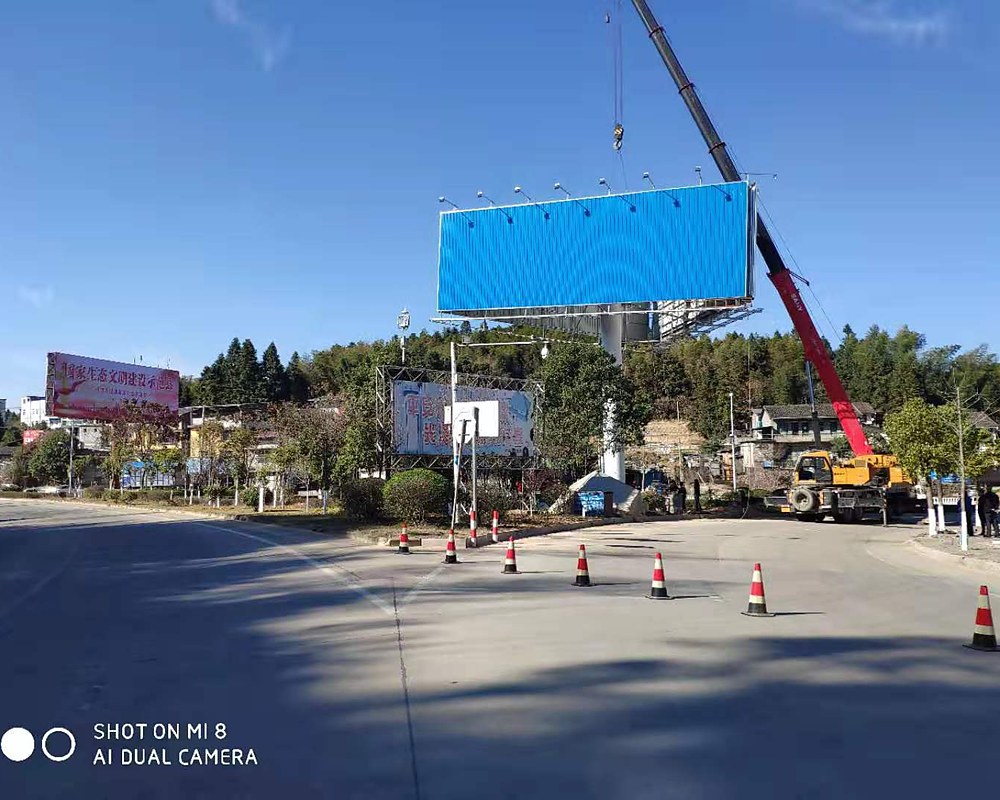
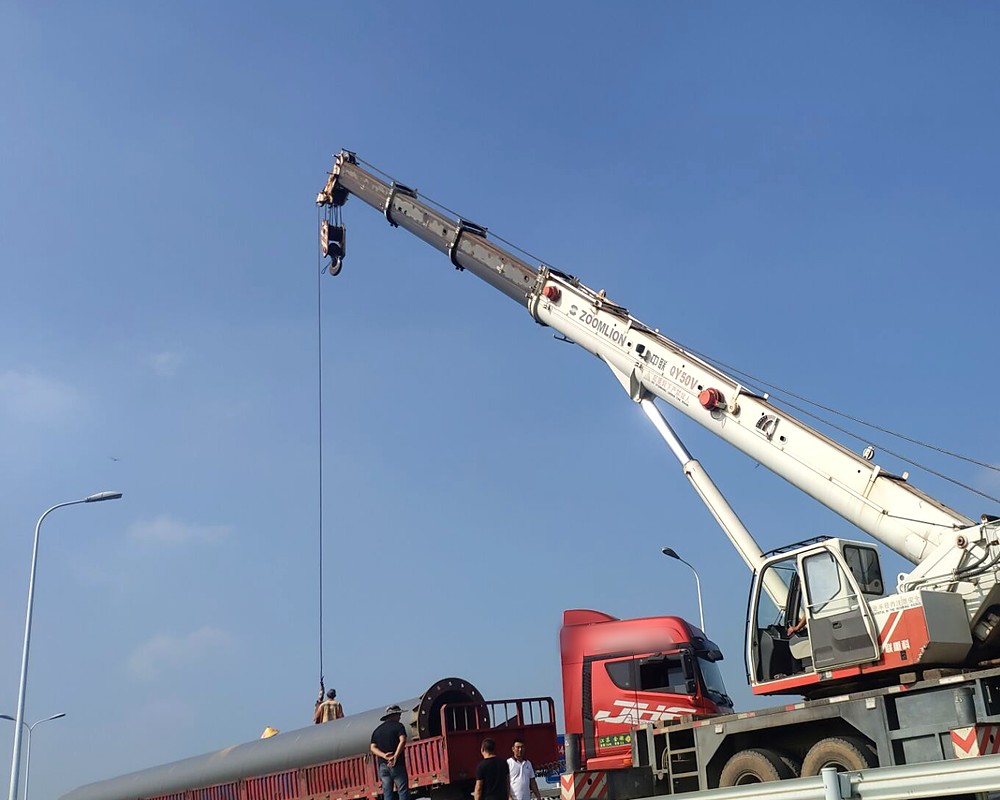
- Lifting plan for columns, trusses and panels, including crane position and load radius
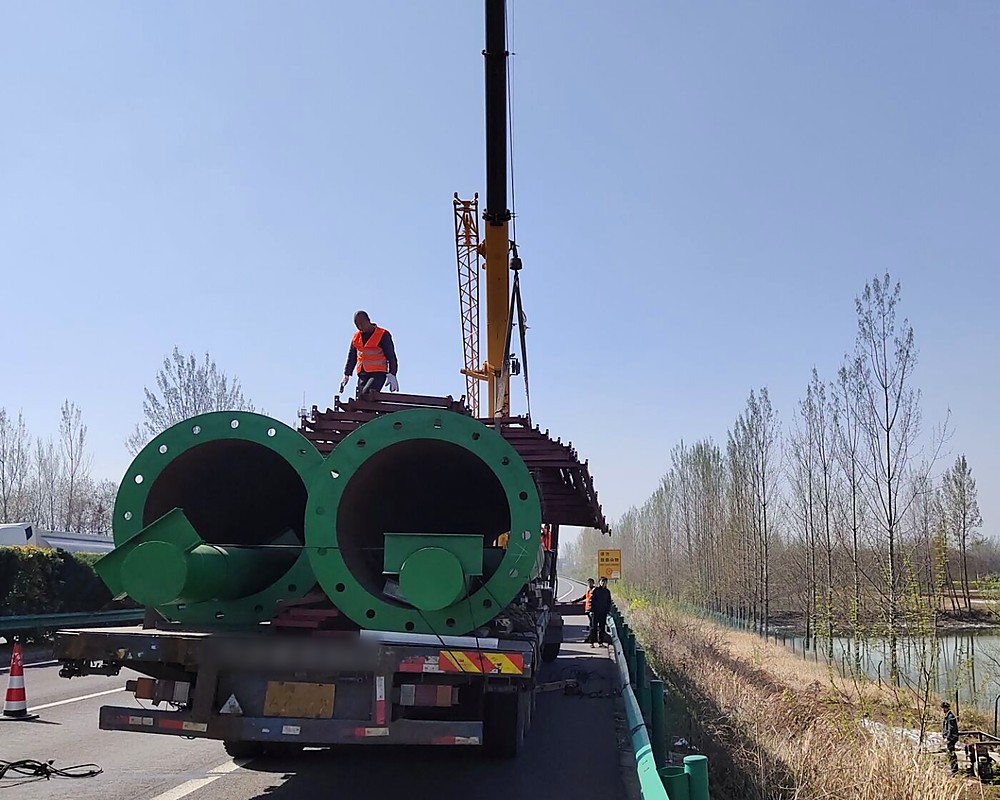
- Lifting points designed into the steel sections and confirmed before shipment
- Load spreading for temporary equipment so that the roof membrane is not damaged
- Working at height method statements and fall protection
- Noise, road closure and working hour restrictions in the city centre
- Inspection of the completed frame before the panels are installed
Working With QIANXI Outdoor on Building-Mounted Projects
QIANXI Outdoor designs and manufactures outdoor advertising structures for rooftop, wall-mounted and ground-mounted applications. For building-mounted projects we work together with the customer and their structural engineer, providing the frame geometry, base reactions, connection details and waterproofing interfaces that the site team needs.
If you are planning a rooftop or facade installation, share the building information and the required sign size, and our engineering team can prepare a structure proposal for review.
 How a Billboard Steel Structure Quote Is Priced
 Billboard Structure Inspection: 12-Point Annual Checklist
 Billboard Frame Deflection: What Limits Apply?
 Hot-Dip Galvanising for Billboard Steel: What to Specify
 Steel Grade for Billboard Structures: A36, S355 or Q355?
 Wind Load Design and Installation Essentials for Outdoor Billboard Steel Structures | QX Outdoor
 Offset Cantilever Billboard Planning: Five Questions Before Fabrication
 QIANXI Outdoor Develops Wind-Resistant Engineering Solutions for Long-Term Outdoor Advertising Structures
 QIANXI Outdoor Expands LED Billboard Structure Solutions for Digital Outdoor Advertising Markets